
India invokes anti-terror law after 13 killed in Delhi blast

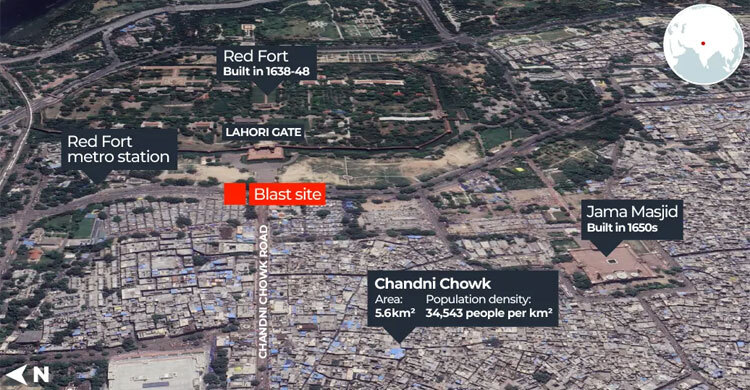
Indian authorities have invoked the country’s stringent anti-terror law, the Unlawful Activities (Prevention) Act (UAPA), after at least 13 people were killed and 20 others injured in a powerful car explosion near the historic Red Fort in New Delhi on Monday night.
The high-intensity blast, which occurred near the Red Fort Metro Station around 7pm local time, ripped through a moving Hyundai i20, sending flames and debris across the busy intersection. Police have not yet confirmed the exact cause of the explosion but said they are treating it as a possible act of terrorism.
Home Minister Amit Shah said all possibilities were being examined “with top agencies involved.”
Prime Minister Narendra Modi, currently visiting Bhutan, vowed to bring those responsible to justice, saying India would “get to the bottom of” the deadly incident.
In the aftermath, security has been stepped up across the capital, with major railway stations in Delhi, Mumbai and Uttar Pradesh placed on high alert. Teams from the National Investigation Agency (NIA) and the National Security Guard (NSG) are jointly probing the case.
What is the UAPA anti-terror law?
The Unlawful Activities (Prevention) Act, first enacted in 1967, is India’s principal anti-terror legislation. It was significantly strengthened in 2004 when provisions from the repealed Prevention of Terrorist Activities Act (POTA) were incorporated. The law was last amended in 2019.
Under the UAPA, authorities can detain individuals for extended periods without formally pressing charges. Supporters argue that such provisions are necessary to tackle cross-border terror networks and organised crime, while critics say the law has often been misused to silence dissent.
By mid-2021, official data showed that the conviction rate under the UAPA stood at just 2 per cent, with many accused spending years in prison before being acquitted.
Source: Al Jazeera