
US-Iran talks in Pakistan uncertain as sides trade accusations

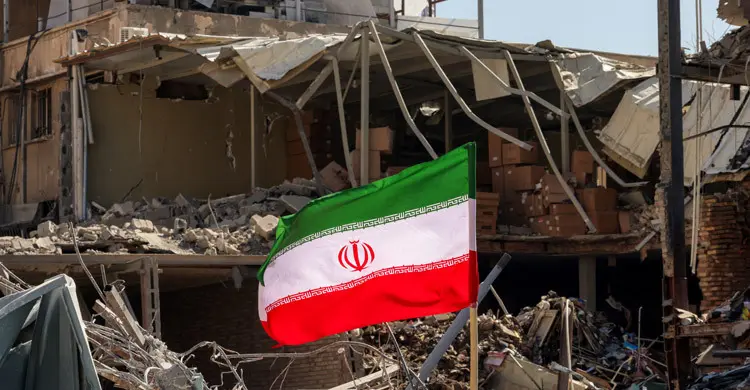
A cloud of uncertainty hung Friday over the scheduled start of talks in Pakistan between the United States and Iran, with no announcement yet on the arrival of negotiators and both sides accusing the other of failing to implement a fragile ceasefire properly.
US President Donald Trump has voiced displeasure at Iran's handling of the strategic Strait of Hormuz, which was meant to be reopened under the deal, while Tehran has reacted angrily to Israeli attacks in Lebanon, insisting that it too falls under the agreement -- something Washington disputes.
Islamabad was nonetheless pressing ahead with its preparations for the high-stakes talks, which official sources say will cover several sensitive points, including Iran's nuclear enrichment and the free flow of trade through the strait.
Iran has suggested that its participation could hinge on a halt in Israeli attacks on Lebanon: "The holding of talks to end the war is dependent on the US adhering to its ceasefire commitments on all fronts, especially in Lebanon," said Esmaeil Baqaei, Iran's foreign ministry spokesman.
Iranian officials have said the Israeli strikes had rendered the Pakistan talks "meaningless".
Nevertheless, Iran's powerful Revolutionary Guards signalled they were committing to the ceasefire and had "not launched anything at any country", according to the state broadcaster.
In a barrage of social media posts that sparked fresh fears for the shaky truce, Trump on Thursday accused Iran of doing a "very poor job" of allowing oil through the Strait of Hormuz and of breaching the terms of their ceasefire agreement.
A fifth of the world's oil and vast quantities of natural gas and fertiliser pass through the strait in peacetime, but only a small number of vessels have crossed since the truce was announced.
- 'Meaningless' -
The two-week truce was agreed to allow negotiations between US and Iranian officials aimed at ending a conflict that has already killed thousands and plunged the global economy into turmoil.
"I am scared of the war starting again, and at the same time I'm scared of the regime staying", Tehran resident Sheida told AFP, withholding her last name out of concern for her safety.
Contributing to the uncertainty around the planned talks, Tehran's ambassador to Pakistan on Thursday deleted a social media post saying an Iranian delegation would arrive in the country later that day.
Still, Vice President JD Vance is due to lead the US delegation on Saturday, joined by special envoy Steve Witkoff and Trump's son-in-law Jared Kushner.
Fresh fractures in the mediation process emerged when Pakistan's Defence Minister Khawaja Asif joined in the criticism of Israel's strikes on Lebanon, calling the country a "cancerous state" and "a curse for humanity" on Thursday evening, in a post taken down hours later.
The Israeli prime minister's office called the remarks outrageous, saying: "This is not a statement that can be tolerated from any government, especially not from one that claims to be a neutral arbiter for peace."
Pakistan does not formally recognise Israel -- a fact that could complicate its role as mediator -- and has insisted the ceasefire includes Lebanon.
One 30-year-old resident of Tehran told AFP they were sceptical negotiations will be successful, describing most of what Trump says as "pure noise and nonsense".
"He wants to manipulate the Islamic republic into getting a deal. I think that was his intention, if you can say there is an intention."
- Parallel talks -
Air raid sirens sounded early Friday in Israel's commercial hub Tel Aviv and other parts of the country, with Hezbollah announcing it carried out drone and rocket strikes targeting Israeli forces on both sides of the border as well as a town in Israel's north.
On Wednesday, less than 48 hours after the ceasefire came into force, Israel carried out its heaviest strikes on Lebanon since Iran-backed Hezbollah entered the Middle East war, killing more than 300 people.
Afterwards, Trump told NBC News that Israel was "scaling back" strikes in Lebanon and that Prime Minister Benjamin Netanyahu had assured him its attacks would become more "low-key".
A Western diplomat said on condition of anonymity that there was ongoing "pressure from European states, Gulf states and Egypt on Israel to prevent renewed Israeli airstrikes on Beirut after 'Black Wednesday'".
As of Friday morning, the Israeli army had not acted on warnings the day before that it would strike wide areas in the capital's south.
Washington has said the Lebanese front of the war will be dealt with under separate talks.
"We can confirm that the Department will host a meeting next week to discuss ongoing ceasefire negotiations with Israel and Lebanon," a US State Department official said.
Neither Israel nor the Lebanese government have publicly confirmed these talks, although the announcement came shortly after Netanyahu ordered his ministers to seek direct dialogue with Lebanon focused on disarming Hezbollah.
A Lebanese government official told AFP that Beirut would require a truce before entering any negotiations with Israel.
Source: AFP