
Where roads lead, farms disappear: The haor tragedy

Published: 19 March 2025, 09:44 PM
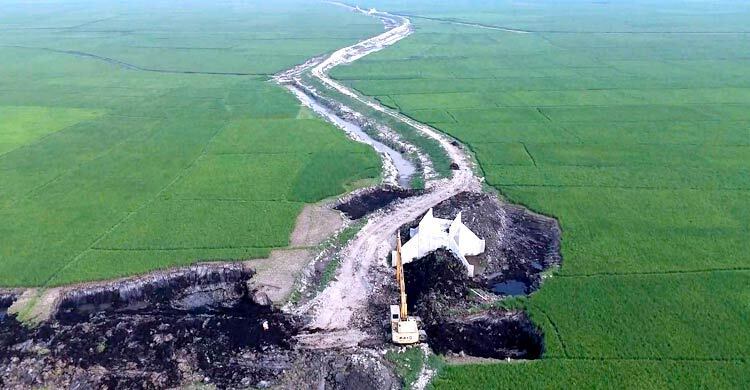
Sunamganj, the heart of lowland areas in north-eastern Bangladesh, thrives on rice. This year, over a million farmers across 12 upazilas have blanketed 223,410 hectares of its 137 haors with Boro season rice, a green sea promising Tk 4,500 crore in harvests. But in Shanghai Haor of Shantiganj Upazila, the shimmer of hope is fading fast. A four-kilometre road is slicing through the wetland’s core, crushing crops before they can ripen—and with them, the dreams of those who sowed them.
A blade through the harvest
Picture this: golden paddies swaying in the breeze, months of sweat nearing payoff. Then, excavators roar in. Since early March, two machines have churned through Shanghai Haor, flattening fields for a road no one asked for. Farmers like Hasan Ahmed watch, gutted. “It’s heart-breaking,” he told Jago News. “This unplanned cut through the haor’s heart wrecks our rice—and us.” Tarif Mia’s four acres are gone. “I’m left with nothing but a road I don’t need,” he said, voice heavy with loss.
Compensation? A whisper, not a promise. The builders—JB Innovation of Dhaka, backed by JICA and the Ministry of Disaster Management—peg the project at Tk 4 crore. Work began last March, paused when waters rose, and resumed this month with a vengeance. But no one’s told farmers what’s owed for their razed land—or if anything is.
A wetland’s wounds
The damage is not just to crops. This road, a concrete scar, will choke water flow come monsoon, drowning upstream fields in relentless floods. Downstream, fish will dwindle, biodiversity will fray, and the haor’s fragile pulse will weaken. “It’s a disaster for agriculture, for us, for everything alive here,” warned Obaidul Haque Milon, a haor advocate. Yet the Shantiganj upazila administration shrugs, eyes averted.
Voices of protest, flickers of hope
Farmers are not silent. “This road brings ruin, not relief,” they chorus, demanding it stop. Company rep Murad Ahmed dangles vague assurances—“those losing paddy will get something”—but land compensation? “Can’t say.”
Upazila Nirbahi Officer Sukanta Saha concedes, “It shouldn’t be here—it’ll kill the haor’s life.” He promises to escalate complaints, but action lags.
Deputy Commissioner Mohammad Ilias Mia vows a probe: “Hurting the haor, its nature, its farmers—that’s wrong.”
A harvest on the brink
Shanghai Haor’s farmers stand at a precipice. A road meant to connect is severing their lifeline—rice, fish, a way of life—while officials ponder and machines grind on. Will Sunamganj’s Bhati soul survive this cut, or bleed out under progress’s weight? The answer’s still dirt and dust.