
Jackfruit crisis in Bhaluka: A bountiful harvest left to rot
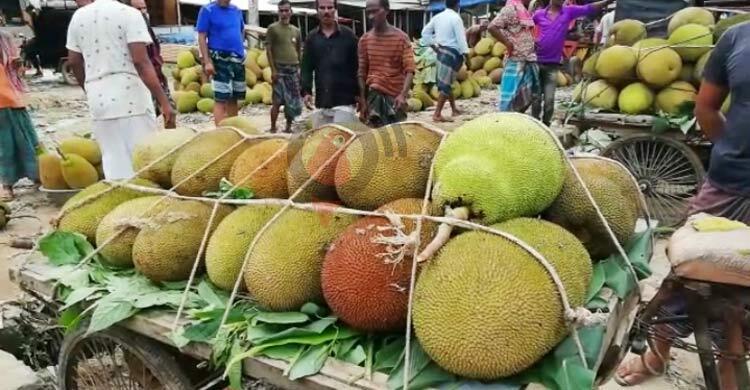
In the red-soil highlands of Bhaluka, Mymensingh’s southernmost upazila, jackfruit trees are laden with fruit, their sweet, juicy flesh a hallmark of the region’s unique terroir.
This year’s bumper harvest should be a boon for local farmers, but instead, lakhs of taka worth of jackfruit are rotting in markets due to a glaring lack of preservation facilities.
As wholesalers snap up these perishable treasures at rock-bottom prices, farmers and local traders are left grappling with losses, sparking urgent calls for processing infrastructure to save this “king of fruits” and unlock its economic potential.
A bitter harvest
Every morning, Bhaluka’s markets – Seedstore bus stand, Angargara Bazar, Uthura Mahar Bazar, Batajor, Mallikbari, and more – buzz with activity. Farmers haul jackfruits in wheelbarrows, rickshaws, bullock carts, and pickups, their vibrant green exteriors promising a juicy delight.
Wholesalers from Dhaka, Sylhet, Cumilla, and beyond descend to buy in bulk, filling trucks with fruit destined for distant markets.
Yet, beneath the hustle lies a harsh reality: without cold storage or processing plants, much of the harvest spoils before it can be sold at a fair price.
Zahirul Islam, a farmer at Seedstore market, shared his frustration with Jago News: “My 24 jackfruit trees produced abundantly this year, but I don’t have the means to store them. Most of my ripe jackfruits are rotting, so I’m forced to sell to wholesalers at whatever price they offer.”
Afsar Ali, another farmer, echoed this sentiment: “In three days, I sold 260 jackfruits, but I had to accept the wholesalers’ low prices. Farmers are being cheated, while wholesalers and shopkeepers profit.”
A market in distress
Bhaluka’s jackfruit markets are a lifeline for farmers, but the lack of infrastructure turns opportunity into loss.
Mohammad Habibur Rahman Habi, a shopkeeper at Seedstore Bazar, estimated that jackfruits worth half a crore taka are traded daily in the market, yet lakhs go to waste annually due to spoilage.
“If we had a processing factory, jackfruits could be preserved for longer, ensuring fair prices for farmers and traders,” he told Jago News.
Tofail Ibne Jamal, a veteran trader with 27 years in the business, sells two to two-and-a-half lakh jackfruits each season. He explained the pricing dilemma: “Jackfruits ripen quickly and start rotting within days. We buy at low prices from farmers to sell to wholesalers before they spoil, but our margins are slim.”
Md Khorshedullah, a wholesaler from Sylhet, lauded Bhaluka’s jackfruits for their exceptional taste and demand but noted that transportation and labour costs eat into profits, leaving little room for farmers to benefit.
A missed opportunity
The red soil of Bhaluka produces jackfruits with a distinct flavour and sweetness, making them a prized commodity.
According to the local agricultural department, jackfruit was cultivated on 2,324 hectares across Mymensingh this year, yielding 185,960 tonnes.
In Bhaluka alone, 385 hectares produced 43,900 tonnes. Yet, without processing facilities, this abundance is a double-edged sword.
Dr Nasrin Akhter Banu, Deputy Director of the Departmetn of Agricultural Extension in Mymensingh, highlighted the systemic issue: “Farmers are forced to sell at wholesalers’ prices because jackfruit is perishable. A government-backed processing factory could ensure fair prices and long-term preservation, encouraging commercial production.”
Upazila agricultural officer Nusrat Zaman added, “We’re exploring ways to create products like jelly and chips from jackfruit. This could boost farmers’ incomes and attract more to commercial cultivation.”
A call for change
Jasim Uddin, a teacher from Seedstore area, voiced a common demand: “A jackfruit processing factory in Bhaluka would transform the market. Farmers would get fair prices, and buyers and sellers would both benefit. It could inspire more people to grow jackfruit commercially.”
The absence of cold storage or processing plants not only hurts farmers but also stifles the region’s potential as a jackfruit hub.
As Bhaluka’s markets brim with the season’s harvest, the sight of rotting jackfruits is a stark reminder of untapped potential. With the right infrastructure, this perishable fruit could become a cornerstone of economic growth, lifting farmers out of distress and turning Bhaluka’s red soil into a goldmine for Bangladesh’s agricultural future.