
Uttara tragedy: ‘Is my body badly burned?’ his last words

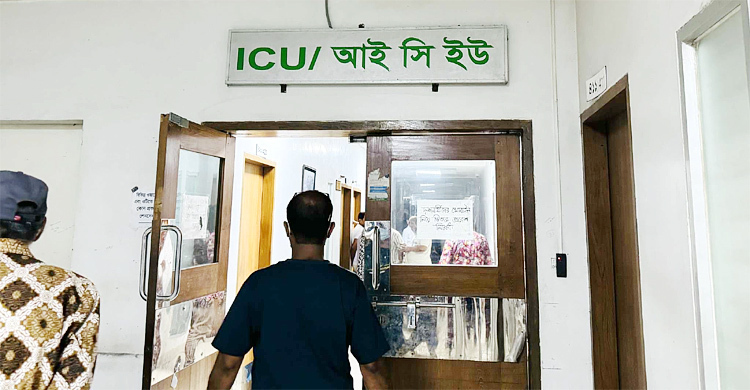
In the dim, sterile glow of the ICU at the National Burn and Plastic Surgery Institute in Dhaka, 14-year-old Abdullah Shamim lay wrapped in bandages. His body scorched by flames, his soul clinging to life. Ninety-five per cent of his skin had been consumed by fire. Yet, in that agony, his voice remained soft. His thoughts, not of pain, but of how he looked to the sister he loved.
“Is my body badly burned, Apu?” he whispered.
Farzana Kanika, his elder sister, stood by his side, her heart shattering with every breath he took. Through trembling lips, she lied, not out of deception, but out of love.
“No, bhai,” she whispered back. “You’re not badly burned. You’ll get better. Be strong.”
She didn’t tell him the truth. How could she? How do you tell a child, barely more than a boy, that his body had been ravaged beyond recognition? That he had survived the unimaginable – the crash of a fighter jet into his classroom at Milestone School and College – only to fight a silent, searing war against death?
Abdullah Shamim was in Class VIII. A quiet boy. A brave one.
Even after the plane struck Haider Ali Bhaban on Monday, July 21, after fire swallowed the walls around him, after the screams and smoke and chaos, Shamim did not collapse.
He walked, on his own burning feet, toward soldiers who had rushed to the scene. His clothes in tatters, his skin peeling, he looked up and said, “Save me.”
And when they carried him to the hospital, still conscious, he spoke his family’s phone number – clearly, carefully – so they would know where he was.
When Farzana arrived, he was still talking. Still aware. Still her little brother.
She gave him water – just a few sips, with the doctor’s permission. He smiled weakly. Then came his final question: “Is my body badly burned, Apu?”
She repeated her gentle lie. “No, bhai. You’ll be okay.”
But deep inside, she wept.
Later that night, in the quiet darkness of July 21, Abdullah Shamim took his last breath.
He was buried the next afternoon in his ancestral village in Shariatpur, earth returned to earth, a child laid to rest far too soon.
The eldest of three siblings, Shamim was more than a brother. He was a pillar. Their father had died seven months ago suffering from a stroke in Saudi Arabia, far from home.
Now, Farzana says, “My father and my brother are sleeping together. One couldn’t come back to us. The other never got the chance to grow up.”
Over the phone from Shariatpur, her voice cracks. Tears fall not just for a brother lost, but for a childhood stolen – by fire, by negligence, by a sky that fell without warning.
“He was my courage,” she says. “My pride. And now… now I have to be strong for the ones who are left.”
But in that ICU, in those final hours, it was he who was strong. A boy who walked through fire, who remembered his family’s phone numbers, who asked not for help, but only if he still looked like himself.
And whose last words were a plea for comfort from the sister who couldn’t bear to tell him the truth.