
Bangladesh’s 35-ministry mission to tackle silent killers

Bangladesh has taken a decisive step toward tackling the country’s growing epidemic of non-communicable diseases (NCDs) — with 35 ministries joining forces in what officials are calling the most comprehensive, cross-sectoral public health initiative in the nation’s history.
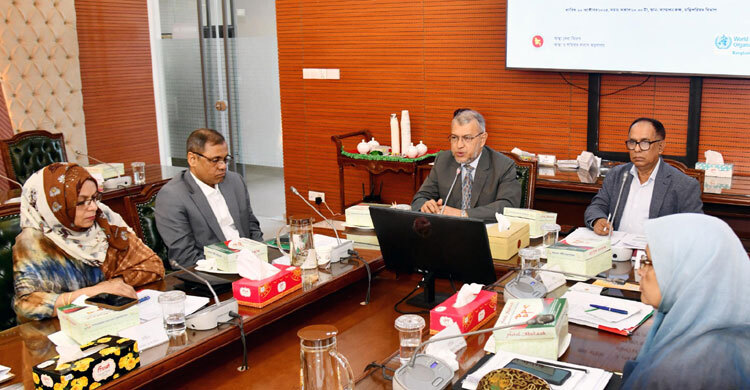
At the heart of this unprecedented collaboration lies the Joint Declaration on NCD Prevention and Control, signed in August 2025. On Monday, the government held the second-phase meeting in Dhaka to finalise the Implementation Workplan for the declaration, which seeks to transform how Bangladesh addresses chronic illnesses such as cardiovascular disease, diabetes, cancer and respiratory disorders — now responsible for more than 60% of all deaths nationwide.
A whole-of-government health strategy
The meeting, held at the Cabinet Division, was organised by the Ministry of Health and Family Welfare (MoHFW) with technical support from the World Health Organization (WHO). It brought together senior representatives from ministries including Education, Youth and Sports, Housing and Public Works, Local Government, Rural Development, and Medical Education — reflecting a coordinated approach rarely seen in Bangladesh’s policy landscape.
The session was chaired by Health Services Division Secretary Md Saidur Rahman, with Cabinet Secretary Dr Sheikh Abdur Rashid attending as Chief Guest. Officials from the WHO and the World Food Programme (WFP) were also present.
In his opening remarks, Dr Rashid described NCDs as a “silent crisis that cuts across every sector of national life”.
“This is not only a health issue — it’s an economic, educational, and social challenge,” he said. “The Joint Declaration is our shared commitment to build a healthier nation through coordinated, sustained action.”
From declaration to implementation
Building on the first-phase meeting held on September 29, this session focused on finalising a multi-sectoral implementation roadmap that translates policy into practice. The plan integrates sector-specific actions within each ministry’s mandate, with clear accountability mechanisms and alignment to the Multisectoral Action Plan for NCDs (2018–2025) and relevant global frameworks, including the UN Sustainable Development Goals (SDGs).
WHO Bangladesh, which is providing technical support, described the effort as a “model of inter-ministerial governance for public health.”
Education and behavioural change at the core
A major focus of the plan is reshaping education systems to promote lifelong healthy habits.
The Ministry of Primary and Mass Education (MoPME) will implement the Health Promoting School (HPS) framework nationwide, introducing daily physical activity, nutrition education, and tobacco-free environments across all primary schools. Unhealthy foods and beverages will be banned near school premises, and teachers will receive training in mental health awareness and stress management.
The Secondary and Higher Education Division (SHED) will integrate life-skills education, physical activity programmes, and mental health initiatives into school curricula, while enforcing anti-bullying policies and safe play environments.
Meanwhile, the Technical and Madrasah Education Division (TMED) will roll out Healthy Madrasah and Health-Promoting Technical Institute certifications, banning sugary drinks and ultra-processed foods, and embedding ethics and mental well-being into vocational and religious education.
Healthier cities, stronger communities
Urban and local governance will be pivotal in reshaping daily living environments. The Local Government Division (LGD) will enforce 100% smoke- and vape-free policies in markets, parks, bus terminals, and local offices. It will also introduce Healthy Market certifications and promote active-living infrastructure such as sidewalks, cycling lanes and inclusive parks.
The Ministry of Housing and Public Works (MoHPW) will embed Healthy Housing Design Standards into all new urban development — ensuring ventilation, accessibility, and disaster resilience — while promoting green, smoke-free, and inclusive construction practices.
In rural Bangladesh, the Rural Development and Co-operatives Division (RDCD) will implement Healthy Village initiatives that combine nutrition, physical activity and mental well-being. Tobacco-free livelihoods and cooperative-based community health programmes will form the backbone of rural prevention efforts.
Reforming health and medical education
To strengthen the health system’s capacity, the Medical Education and Family Welfare Division (MEFWD) will reform medical, nursing, and family welfare curricula to include NCD prevention, mental health, nutrition, and palliative care.
Primary healthcare centres will expand screening for hypertension, diabetes, respiratory diseases, and cancer, while continuing medical education (CME) and digital training will upskill clinicians in preventive care. New national palliative care guidelines and research networks will also be established.
Youth and sports in the fight for health
The Ministry of Youth and Sports (MoYS) will integrate NCD prevention and mental health into national youth and sports programmes. Two flagship campaigns — Move Bangladesh and Fit Youth, Fit Nation — will encourage regular physical activity and balanced diets nationwide.
Sports venues, youth centres and national events will be declared tobacco-, alcohol-, and substance-free, and the Play Clean, Live Clean initiative will promote mental health and injury prevention for young athletes.
Oversight, accountability, and partnership
To ensure coherence and long-term success, a High-Level Monitoring Committee will oversee the plan’s implementation. The committee, led by the Cabinet Secretary and including all 35 ministries, will meet regularly to track progress, share data, and address challenges.
Development partners including WHO and WFP reaffirmed their commitment to providing technical and policy support for the implementation of the workplan.
Aligning with vision 2041 and global goals
The initiative is closely aligned with Bangladesh’s Vision 2041 — the government’s long-term roadmap for achieving high-income status and universal health coverage — as well as the UN Sustainable Development Goal 3.4, which calls for reducing premature deaths from NCDs by one-third by 2030.
Experts say the 35-ministry framework could serve as a global model for low- and middle-income countries seeking to integrate NCD prevention into national development planning.
A national health turning point
With NCDs claiming nearly seven in ten lives in Bangladesh, the stakes are enormous. The country’s progress in reducing child and infectious disease deaths now risks being undermined by lifestyle-related conditions linked to diet, inactivity, and pollution.
At the close of the meeting, Cabinet Secretary Dr Sheikh Abdur Rashid urged sustained collaboration: “Health is not just the business of hospitals — it’s the business of every ministry, every community, and every citizen. Our collective action today will decide the nation’s health tomorrow.”