
Rivers of the dead: Bodies emerge as water hides the crime

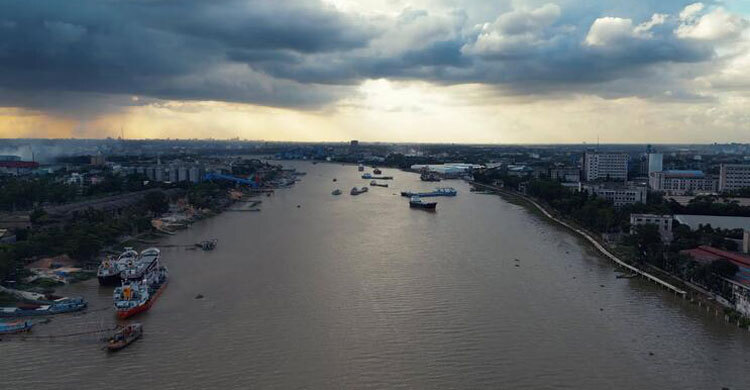
Once celebrated as the land of rivers, Bangladesh now watches those same waterways turn traitor.
The veins that once nourished its soil have become graveyards, silent, swollen, and sinister.
Where boats once ferried rice and jute, they now drift past bodies.
Every few days, a corpse bobs to the surface somewhere in the country’s vast, tangled delta.
A woman tangled in a fishing net.
A child wedged beneath a pier.
A man, bloated beyond recognition, his hands bound with nylon rope.
From January to July this year, 301 bodies were pulled from rivers across Bangladesh, more than one every day.
Nearly a third remain nameless, their faces erased, their identities lost to the current.
And behind many of those deaths, investigators say, lies a single, chilling motive: to let the water destroy the truth.
The river as an accomplice
Killers have discovered what nature does best – erase.
“The river is the perfect crime scene,” says Professor Omar Faruk, criminologist at Maulana Bhashani Science and Technology University.
“Once the body goes in, the evidence goes out. Skin slips off. Fingerprints vanish. Wounds mimic fish bites or propeller marks. Within days, there’s nothing left to prove murder.”
According to River Police Headquarters, an average of 43 bodies surface every month, up from 36 last year.
The Shitalakshya, Buriganga, Meghna, and Karnaphuli rivers are the deadliest stretches.
Each current is both conveyor and cleanser, carrying bodies from one district to another while washing away DNA, fibres, and blood residue that could convict a killer.
Organised gangs and petty criminals alike have learned to use this to their advantage.
A murder in Gazipur may end with a body dumped miles away in Chandpur, beyond the jurisdiction, and competence, of local police.
The killer walks free while the corpse becomes “unidentified drowning victim”.
A chilling discovery on the Buriganga
On August 23, the Buriganga, Dhaka’s black-water artery, gave up two of its secrets: a woman and a child, bound together, pulled from the river’s edge near Sadarghat.
The post-mortem left no doubt: both were strangled before being thrown into the water.
By the time they were found, their fingerprints had dissolved. Their faces had changed.
Police froze the bodies, preserved DNA samples, and waited. No one came.
A murder case was opened – and then, silence.
Weeks later, the river kept its secret. The killers had succeeded.
A country drowning in the unclaimed
Between January and July, 301 bodies surfaced nationwide.
Narayanganj led the grim list with 34, followed by 32 in Dhaka.
Of these, 92 remain unidentified.
Last year’s total: 440 bodies, 141 nameless.
Forty-one murder cases have been formally filed this year following river recoveries, but experts believe dozens more are quietly written off as “accidental drowning” for lack of proof.
“The classification is convenient,” says a senior police investigator, requesting anonymity.
“When there’s no evidence, no suspect, and no family pushing for justice, it’s easier to close the file. The river helps us pretend the case is solved.”
The headless man of Shitalakshya
On August 28, Narayanganj police found a headless corpse floating in the Shitalakshya River, a notorious dumping point near industrial docks.
The body’s hands, miraculously intact, told the story.
Fingerprint analysis identified him as Habib, 27, a local transport worker.
“They cut off his head to hide who he was,” said Inspector Abdul Mamud of Kachpur Naval Post.
“They thought the current would carry him away. But the river gave him back sooner than they expected.”
Investigators suspect Habib had witnessed a drug deal gone wrong. His murder was swift, the disposal strategic.
But without the head, and without the killers, justice remains adrift.
How the water kills the evidence
The forensic clock starts ticking the moment a body hits the water.
Within 24 hours, soft tissue begins to break down.
After 48-72 hours, gas build-up causes the corpse to rise, swollen and discoloured.
By day 4, fingerprints start to peel away.
By day 6 or 7, facial features distort beyond recognition.
By two weeks, bones separate; fish and bacteria finish the rest.
“In summer, a body can decompose in two or three days,” says SP Md Alamgir Hossain of Narayanganj River Police.
“After four days, fingerprints are gone. In winter, maybe a little longer — but rarely enough to help us.”
Even clothing offers few clues. Water discolours fabric, dissolves blood, and scrubs away trace elements such as gunpowder residue or oil stains that could link the victim to a crime scene.
The protocol of the dead
When a body is found, officers race against decay.
They photograph the remains, note distinctive marks, and circulate images to nearby police stations.
They check missing-person reports – the General Diary entries that act as Bangladesh’s first line of record.
If no one recognises the face, they summon the PBI or CID to take fingerprints, if the fingers still exist.
If that too fails, the body is transferred to a hospital morgue, frozen for a short window.
Space is scarce.
When the queue of the unclaimed grows too long, the dead are handed over to Anjuman-e-Mufidul Islam, the country’s century-old burial charity.
Based on clothing or features, volunteers guess religion, offer a brief prayer, and bury the unknown.
Before burial, a DNA sample is stored – the final thread between the living and the lost.
“We keep them because justice doesn’t expire,” says SP Abdullah Al Mamun of Dhaka River Police.
“If a mother comes years later, we can still match her DNA. But only if she knows where to look.”
Currents that carry crimes across districts
Rivers, once celebrated for binding Bangladesh together, now help crimes dissolve between jurisdictions.
A murder committed upstream in Gazipur might surface downstream in Chandpur.
By then, the local police who received the missing-person report have no body, and those who have the body have no report.
“The killer counts on that gap,” says criminologist Faruk.
“It’s like crossing a border – the investigation resets.”
Additional IGP Kusum Dewan, chief of River Police, admits the challenge: “When we can’t identify the victim, we can’t find the motive. Without a motive, we can’t track the killer.
The river doesn’t just hide the body, it erases the crime.”
Why the killers choose water
Detectives say motives for river disposals range from gang retribution to domestic murders — but the method is always the same: ruin the evidence.
The logic is simple, brutal, effective.
Water destroys trace evidence.
Blood, saliva, semen – all dilute or vanish.
Rivers carry the body away.
Jurisdictional confusion buys time.
Decomposition confuses forensics.
Injuries resemble animal bites or propeller wounds.
Plausible deniability.
The killer can claim: He drowned.
For professional hitmen, disposal by river is almost a signature.
In Narayanganj, police whisper of “contract bodies” that appear at specific bends known only to smugglers and trawler crews.
“The code is simple,” says one officer. “If it floats within three days, it was meant to be found — a warning. If it doesn’t, it was meant to vanish.”
The bureaucracy of forgetting
Even when families report a disappearance, the odds of identification are slim.
Many poor households can’t afford travel to district morgues or lack digital photographs of their missing relatives.
Databases are patchy; DNA archives incomplete.
By the time information trickles through official channels, the body is long buried.
The case turns into paperwork – a line on a spreadsheet, an unclaimed corpse, male, approx. 30, recovered from river.
Bangladesh’s police forces, stretched thin and fragmented, rarely revisit these files.
Some officers admit privately that river bodies are “career dead ends”: no witnesses, no suspects, no reward.
An endless procession
As monsoon rains swell the rivers and violence simmers in the cities, the procession of the dead shows no sign of slowing.
Morning headlines read like a grim litany:
Body found in Meghna.
Two corpses recovered from Karnaphuli.
Headless torso in Buriganga.
Each name missing is another story unfinished, another family condemned to uncertainty.
And somewhere, another killer calculates how deep, how far, how fast the current must run before the evidence disappears and the truth drowns for good.
The rivers keep flowing ancient, indifferent, and now, terrifyingly complicit.