
Year-round bans leave coastal fishermen drowning in debt and despair
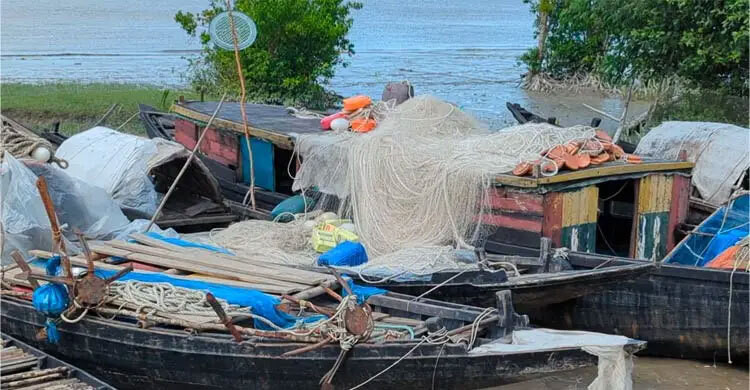
The wind that blows across the coastal rivers once carried the scent of salt, fish, and hope.
Today, it carries the sound of despair. Along the shores of Mongla, thousands of fishermen sit idle beside their boats — staring at the waters that once fed them, but now forbid them.
For generations, the people of these riverine villages have lived by the rhythm of the tide. But that rhythm has changed.
Fishing bans now stretch across nearly the entire year, imposed one after another to conserve fish stocks, protect breeding seasons, and preserve biodiversity.
While these bans aim to protect nature, they are pushing the fishermen – the very guardians of these waters – into deeper poverty.
“We live half the year without work”
This November 1 marks the beginning of an eight-month ban on catching jatkas, the young hilsa fry that migrate through the rivers and estuaries. During this long stretch, fishermen are only allowed to catch other species using selective nets but they say there’s hardly any fish left.
“Our fathers lived from the river, and so did we,” said Zahid Bepari, a middle-aged fisherman from Chila village. “But now, there’s nothing left to catch. The bans never end. The rice they give us doesn’t last even two weeks. The rest of the time, we borrow money and sink into debt.”
Fishermen like Zahid have borrowed from local moneylenders to buy nets and repair boats – loans that grow heavier with every ban. Without steady income, they pawn their nets, sell their boats, or move to towns to work as day labourers.
Endless restrictions, little relief
Fishing is banned at multiple times every year:
April 15-June 11: A 58-day ban on all sea fishing during the breeding season of marine species.
October: A 22-day ban to protect mother hilsa from being caught during egg-laying.
November 1-June 30: An eight-month jatka hilsa conservation campaign, restricting the capture of juvenile hilsa.
June-August: A three-month Forest Department ban on fishing in the Sundarbans for wildlife and fish reproduction.
During some of these periods, registered fishermen receive rice rations – 70 kg during the sea ban, 25 kg during the mother hilsa ban, and 160 kg split into two phases during the jatka ban. But most fishermen say that’s not nearly enough for their families, and many receive nothing at all.
“I’ve been fishing for 30 years, but I don’t have a card,” said Md Kamal Hossain from Mongla’s Burirdanga area. “Without a card, we don’t get rice. Even those who get it say it’s not enough. How can you feed a family for months with a few kilos of rice?”
Boats abandoned, families hungry
In the fishing villages along the Pasur and Mongla rivers, the impact is visible. Boats lie overturned on the muddy banks. Nets hang in tatters. The fish markets are silent.
“When the bans come, we stay home and wait,” said Israfil Bayati, a fisherman in his forties. “We can’t go to the river. If we do, they seize our nets and boats. What can we do? We’ve been fishermen since childhood. We don’t know any other trade.”
Some men migrate to Khulna or Bagerhat to pull rickshaws or work in sawmills. Women take small loans from NGOs to start cottage work – but without steady income, families fall into chronic debt.
A broken safety net
According to Bidyut Mandal, president of the Mongla branch of the National Fishermen’s Association, around 30,000 fishermen live in Mongla upazila alone. Of them, about 15,000 qualify for registration, but fewer than 6,400 have official cards.
“Many who have cards aren’t real fishermen, they’re politically connected,” Mandal alleged. “Meanwhile, genuine fishermen keep applying but don’t get listed. So, when the aid comes, the wrong people get it. We’ve demanded that the Fisheries Department fix this and ensure fair registration.”
Without proper oversight, the rice meant for struggling fishermen often gets lost in bureaucracy and corruption. The aid that does reach them is barely enough for survival.
Officials admit the gaps
Mongla’s Senior Fisheries Officer Md Zahidul Islam acknowledged that more support is needed. “We have 6,398 registered fishermen now, and we’re verifying more applications,” he said. “The Fisheries Department provides rice aid during its bans. The Forest Department, which imposes its own restrictions, hasn’t provided assistance yet – but they’ve initiated plans to start from next year.”
Still, for the men who wait on the shores, next year feels far away.
Caught between tide and time
The fishermen’s lives now move in cycles – ban, debt, ban again. Each restriction meant to save fish ends up pushing the people who depend on them closer to ruin.
Under the golden evening light, the river glistens – calm, indifferent, untouchable. On its banks, a fisherman mends a net he may not cast for months. “We protect the fish,” he says softly, “but who will protect us?”