
Halda River declared first-ever fisheries heritage site in Bangladesh

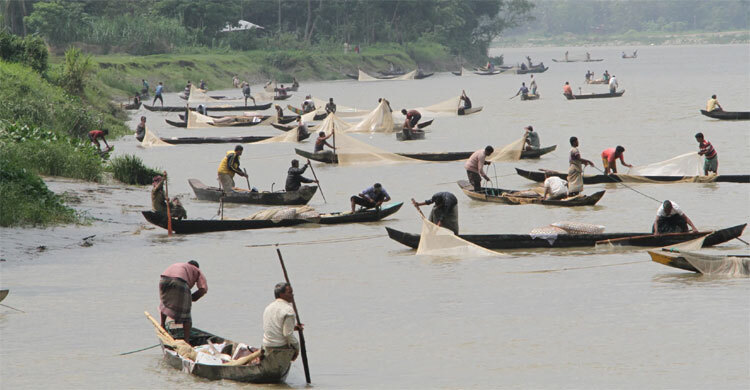
In a landmark move for biodiversity conservation, the Ministry of Fisheries and Livestory has officially declared the Halda River a Fisheries Heritage Site, marking it as the first river in Bangladesh to receive such recognition.
The historic notification was issued on Wednesday, 5 November 2025, designating a total area of 23,422.28 acres (93,612 bighas) along the banks of the Halda River — spanning Ramgarh and Manikchhari upazilas in Khagrachhari district, and Fatikchhari, Raozan, Hathazari upazilas, as well as Panchlaish thana in Chittagong district — as the “Halda River Fisheries Heritage”.
This initiative aims to protect the river’s unique role as the only natural breeding ground of rui (Labeo rohita) in the entire country. Every year during the pre-monsoon months of April to June, mature rui migrate upstream, releasing millions of fertilised eggs into the swift-flowing waters — a phenomenon vital to freshwater aquaculture across South Asia.
The declaration also seeks to safeguard the habitat of endangered species such as the Gangetic dolphin, while restoring and preserving the river’s fragile ecosystem.
Strict Conservation Measures Enforced
From the date of gazette publication, a comprehensive set of environmental protections has come into immediate effect:
Fishing Ban: No fish or aquatic animals may be caught or hunted anywhere within the heritage zone.
Controlled Egg Collection: Fertilised rui eggs may only be collected during the breeding season under strict supervision by the Department of Fisheries.
Habitat Protection: Any activity that damages plant or animal habitats, alters natural water flow, or changes land characteristics is strictly prohibited.
Pollution Control: Discharge of sewage, industrial effluents, or liquid waste from homes, factories, or institutions into the river is banned.
No River Modification: Cutting or straightening river bends is forbidden to preserve natural hydrology.
Ban on New Dams: Construction of new rubber or concrete dams on the Halda or its 17 connected canals is prohibited.
Water Extraction Restrictions: No new water treatment plants or irrigation projects can draw from the river without approval from the newly formed Halda River Fisheries Heritage Monitoring Committee.
Research Oversight: All domestic and foreign research involving the river’s water or fish must obtain prior permission from the Monitoring Committee.
Migration Corridors Protected: No obstructions may hinder fish migration during breeding season.
Sand Mining Banned: Sand extraction using dredgers or harmful methods is completely outlawed throughout the Halda and its tributaries.
Heavy Vessel Regulation: Engine-driven vessels (including cargo and sand boats) are permitted only from the Karnaphuli estuary to Nazirhat Bridge, and only outside sensitive sanctuary periods.
Agricultural Restrictions: Tobacco cultivation and use of harmful pesticides or herbicides in the river basin are banned.
Brick Kilns Prohibited: No new brickfields may be established near the riverbanks.
A Step Toward Ecological Revival
The Halda River, long threatened by illegal sand mining, pollution, and encroachment, has seen a dramatic decline in fish populations over recent decades. This declaration is expected to revitalise conservation efforts and empower local communities and authorities to restore the river’s ecological balance.
The Ministry emphasized that it reserves the right to amend the notification over time — including adjusting boundaries or introducing additional rules — to ensure effective management in response to environmental changes.
With this designation, Bangladesh joins a growing global movement to recognise and protect ecologically significant inland water systems — setting a precedent for other rivers like the Padma, Jamuna, and Surma.
Environmentalists and fisheries experts have welcomed the move, calling it a “long-overdue step” toward sustainable development and the preservation of the nation’s natural aquatic heritage.