
Hasina, Kamal sentenced to death; Mamun jailed

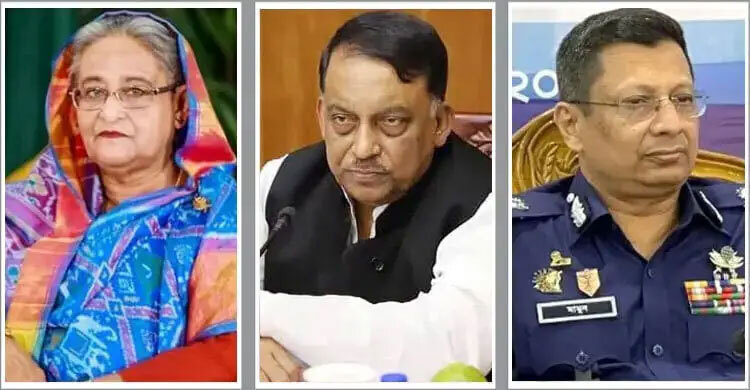
In an unprecedented judgment, the International Crimes Tribunal (ICT) has sentenced ousted Prime Minister Sheikh Hasina and former Home Minister Asaduzzaman Khan to death for crimes against humanity committed during the July 2024 mass uprising.
Former Inspector General of Police (IGP) Chowdhury Abdullah Al-Mamun has been sentenced to five years in prison, receiving a reduced sentence after agreeing to testify as an approver.
The verdict was delivered on Monday afternoon by a three-member bench of Tribunal-1, led by Justice Golam Mortuza Majumder, with Justice Shafiul Alam Mahmud and Justice Mohitul Haque Enam Chowdhury serving as co-judges. The court found the defendants guilty on multiple counts, including ordering lethal force against protesters and exercising "superior command responsibility" during the student-led nationwide uprising.
This marks the first time in Bangladesh’s history that a former head of government has been convicted and sentenced for crimes against humanity.
Charges proven across multiple incidents
In its 453-page verdict, divided into six sections, the tribunal ruled that the prosecution proved its allegations beyond reasonable doubt. Sheikh Hasina was sentenced to death on two major charges, while Asaduzzaman Khan was found guilty on one death-eligible count.
The case included five formal charges, among them:
Incitement and command responsibility for the killing of approximately 1,400 protesters
Ordering the use of live ammunition against demonstrators
Responsibility for the deaths of university student Abu Sayeed in Rangpur
Shooting and killing six protesters in Dhaka's Chankharpul area
Burning six people alive in Ashulia
Causing injuries to more than 25,000 individuals
The tribunal described the actions as systematic, brutal and targeted against civilians exercising their democratic rights.
Political context: A fall from power
Sheikh Hasina’s nearly 16-year rule ended on August 5, 2024, following months of countrywide protests led by students and civil society. Amid the escalating unrest, Hasina fled Bangladesh and has since resided in India, alongside former Home Minister Asaduzzaman. Both were tried in absentia.
Journey of the case: A 397-day trial
The tribunal, reconstituted after the removal of the Awami League government, began proceedings on October 17, 2024, with Sheikh Hasina named as the sole accused. Over time, the net widened to include Mamun and Asaduzzaman Khan Kamal.
Key milestones include:
March 16, 2025: Mamun added as a co-accused
May 12, 2025: Investigation report submitted with evidence and witness statements
June 1, 2025: Formal charges filed
July 10, 2025: Charges officially framed
August 3, 2025: Trial begins with televised opening statements
October 8, 2025: Testimony phase ends after 54 witnesses
October 23, 2025: Closing arguments completed
November 17, 2025: Verdict announced — 397 days after case initiation
The prosecution submitted 8,747 documents and exhibits as evidence.
Approver testimony and viral audio clip played key roles
Former IGP Chowdhury Abdullah Al-Mamun’s decision to become an approver significantly strengthened the prosecution’s case. His confession detailed internal orders, chain of command dynamics, and conversations between senior officials during the crackdown.
A leaked audio clip featuring Sheikh Hasina claiming she had a “license to kill 226 people” was also admitted into evidence. Officials said the recording reflected intent and mindset.
Earlier this year, the tribunal sentenced Hasina to six months’ imprisonment in a contempt case for remarks deemed as an attempt to intimidate the judiciary.
Aftermath and next steps
The government has not released an official response yet, but legal experts predict lengthy appeals and possible international attention.
With two of the convicts currently abroad, the tribunal has instructed the government to:
Notify Interpol
Begin extradition proceedings
Freeze relevant personal and political assets
Crowds gathered outside the tribunal watched the verdict broadcast live—another first in Bangladesh’s war crimes–style judicial proceedings.
A turning point in Bangladesh’s judicial and political history
Today’s verdict marks a defining chapter in Bangladesh’s governance, accountability, and transitional justice framework.
For supporters of the tribunal, it is a historic reckoning.
For critics, a decision with profound consequences for politics, power dynamics and the future democratic landscape.
But one fact is undeniable: Bangladesh has entered uncharted judicial territory, with a former head of state sentenced to death for crimes against her own citizens.