
BMU earns global recognition as stroke treatment training hub
In a significant boost to Bangladesh’s healthcare sector, Bangladesh Medical University (BMU) has been accredited as an international training centre for advanced stroke treatment, marking a major step forward in life-saving neurological care.
The accreditation has been jointly awarded by the World Federation for Interventional Stroke Treatment (WIST) and the Image Guided Therapy Research Facility of the University of Dundee, enabling BMU to provide specialised training in cutting-edge procedures such as Endovascular Stroke Treatment (EVT) and Carotid Artery Stenting (CAS).
The development was confirmed in an official communication sent on March 13 by Iris Q Grunwald, Director of the Image Guided Therapy Research Facility at the University of Dundee, to the BMU Vice-Chancellor, according to Professor Shahinul Alam, immediate past vice-chancellor of the university.
A milestone for stroke care in Bangladesh
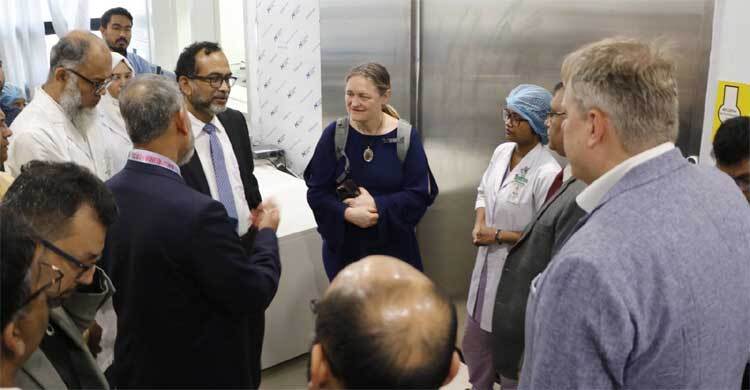
The accreditation follows a detailed inspection of BMU’s Super Specialised Hospital Cath Lab in November 2025, conducted by Professor Grunwald and Paul Guiler. Their assessment found the facility capable of meeting international standards required for advanced stroke intervention training.
Experts say the recognition will position Bangladesh as an emerging regional hub for modern stroke treatment, where timely intervention can significantly reduce death and disability.
International training opportunity
As part of the collaboration, the University of Dundee will host a nine-day specialised training programme in September 2026 for six BMU participants, further strengthening local expertise in minimally invasive stroke procedures.
The accreditation process has been coordinated by Amin Islam of Queen Mary University of London, highlighting a growing network of global academic cooperation in Bangladesh’s medical education sector.
Hope for faster, better treatment
Health professionals believe the move will enhance the country’s capacity to treat stroke patients more effectively, particularly through rapid, image-guided interventions that can restore blood flow to the brain and prevent long-term damage.
With this accreditation, BMU is expected to play a leading role in training doctors, expanding advanced stroke care, and improving patient outcomes across Bangladesh and beyond.