
Parliament fixes March 31 to discuss July Charter

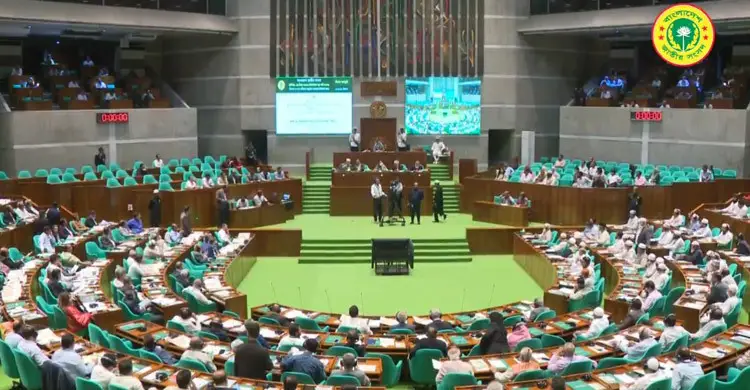
Parliament on Sunday, March 29, fixed March 31 to discuss the July National Charter (Constitution Reform) Implementation Order, 2025, in line with an adjournment motion placed by the Opposition Leader.
Opposition Leader Dr Md Shafiqur Rahman gave the notice of adjournment motion on a matter of public importance under Section 62 of the Rules of Procedure, seeking the adjournment of the business of the House for discussing the summoning of the session of the Constitution Reform Council as per the July National Charter (Constitution Reform) Implementation Order, 2025.
While raising the adjournment motion, Shafiqur, in his written statement, said people mandated for the July National Charter Implementation Order as 70 per cent of people voted for the ‘Yes’ option in the referendum held simultaneously with the 13th parliamentary election on February 12 last.
Dr Shafiqur, also the amir of Bangladesh Jamaat-e-Islami, said since ‘Yes’ votes won in the referendum, the newly elected MPs are legally obliged to take two oaths as members of both Parliament and the Constitution Reform Council.
Following the placement of the adjournment motion, Law Minister Md Asaduzzaman described the motion as a very rational and timely proposal.
“I think it is a logical and timely proposal. This issue deserves discussion. There will be a discussion from their side as well. There will be a discussion from our side as well. We want to discuss,” he said.
Asaduzzman requested Deputy Speaker Barrister Kayser Kamal, who was chairing the House, to fix a time for the debate on the issue.
Noting that four relevant books should be on the desks of MPs during the debate, the law minister said. “We want the July National Charter to be implemented.”
Then the Deputy Speaker fixed March 31 for the two-hour discussion on the issue as the last agenda item of the day.
Then Home Minister Salahuddin Ahmed took the floor on the point of order and stressed the need to follow parliamentary rules in discussing a constitution reform proposal.
He also suggested the formation of an all-party constitutional committee to address the issue through consensus.
Speaking in parliament, he said the opposition leader had submitted a notice under Section 62 of the Rules of Procedure, seeking discussion on a matter of urgent public importance.
However, he argued that such a notice was not procedurally valid for the subject raised, as constitutional reform falls under legislative action rather than a motion for adjournment.
Ahmed pointed out that discussions on urgent public importance under Rule 62 do not apply to matters that require legislation, citing Rule 63, which bars debate on issues that can only be resolved through legislation.
He added that the opposition could instead bring the matter under Rule 68, which allows for a two-hour discussion.
"The notice itself is not valid. A valid notice must come first, and only then can discussion take place," he said, adding that the Speaker has the authority to ask for amendments to the notice or accept it in a revised form.
The Home Minister clarified that he was neither opposing nor objecting to the proposal itself but emphasised adherence to parliamentary procedure.
Highlighting his party's position, the BNP standing committee member proposed forming a "Constitutional Reform Committee" comprising members from both treasury and opposition benches.
He said such a body could collect opinions from constitutional experts, political parties, civil society representatives, and other stakeholders before submitting a report to parliament within a specified time frame.
Referring to the July National Charter, Salahuddin said it represents a political compromise document but does not automatically amend the Constitution. “Any constitutional change must come through proper legislative process, through bills passed in parliament,” he added.
He also noted that political parties, including the BNP, have received public mandates based on their election manifestos and should reflect those commitments in any reform process.
He cautioned against deciding constitutional matters through a simple yes-or-no vote under an adjournment motion, instead calling for a broad national consensus.
“We want a constitutional amendment that reflects the aspirations of the people, including the spirit of the July uprising, and can stand the test of time,” he said.
Source: BSS