
Measles surge overwhelms Dhaka hospital, reveals staff crisis

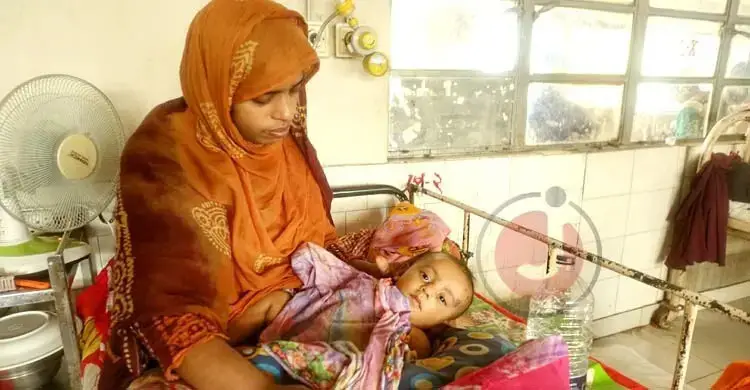
Two-year-old Fadin from Savar has been suffering from chickenpox since March 21. His father, Mehedi Hasan, initially treated him with medicines from a local hospital, but his condition did not improve. Instead, it worsened, and he developed a fever. Later, a physician advised taking him to the Infectious Diseases Hospital in Dhaka, where he has been receiving treatment for the past three days. Fadin is now showing some improvement.
Monir Hossain Fahim brought his four-month-old son, Ayan, from Ershad Nagar in Karail, Dhaka. Speaking to Jago News, he said, “It started with cold and fever. Even after 15–20 days of treatment, there was no improvement, and the condition persisted. Later, we went to the Institute of Epidemiology, Disease Control and Research, and from there we were referred to the Infectious Diseases Hospital. Doctors advised hospital admission, so we admitted him.”
Sakhawat, who came from Cherag Ali in Tongi with his 19-day-old son, Mobarak, said, “First, he developed a fever, then rashes appeared. After consulting a doctor, we were referred here. He has been receiving treatment for two days.”
Parveen Akter brought her seven-year-old daughter, Sayma, from Tongi. She said, “She developed chickenpox seven days ago. Then she had a fever and later suffered seizures. That’s why we came here and have been receiving treatment for the past five to six days.”
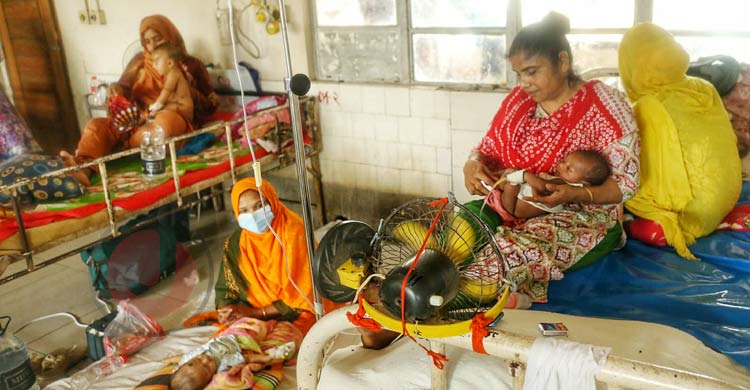
Apart from Fadin, Ayan, Mobarak, and Sayma, currently 112 children infected with measles are admitted to the hospital. A visit to the facility on Sunday (March 29) revealed that it is overcrowded, with no space to accommodate more patients. The 100-bed hospital is now overwhelmed.
Recently, a surge in measles cases has been observed across the country, increasing pressure on hospitals. This highly contagious disease primarily affects the respiratory system of children and spreads rapidly from person to person.
Sources say that in February and March alone, 560 patients with measles symptoms sought treatment at the hospital. Among them, 22 deaths have been reported so far this year, including 19 in March alone. In contrast, only 69 suspected measles patients were admitted throughout the entire previous year, of whom 13 were confirmed cases.
In addition to measles, patients from across the country come to this hospital for treatment of various diseases, including tetanus, diphtheria, viral hepatitis, chickenpox, mumps, and polio. However, the hospital is facing severe shortages of infrastructure and manpower.
Although the hospital has a capacity of 100 beds, 112 are currently occupied by measles patients alone. Each of these diseases carries a high risk of transmission. In mid-March, the number of patients exceeded 200, forcing many to receive treatment in the corridors.
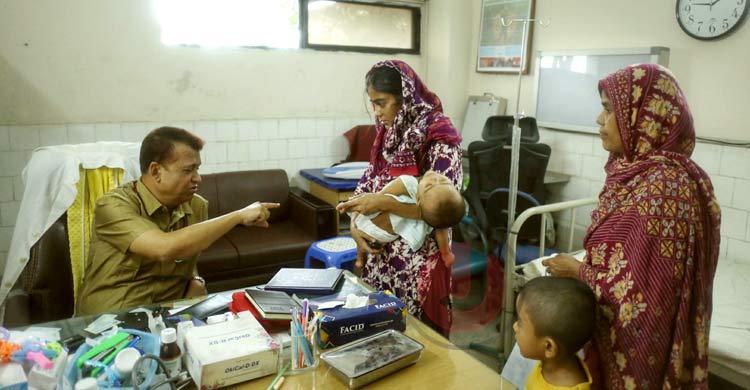
The staffing crisis is also severe. Officials said there are currently 20 doctors, whereas at least 14 more are needed. Nurses are handling ticketing duties, and there is a shortage of fourth-grade staff. Although 25 staff members are working, 59 positions remain vacant.
Health experts say gaps in the immunisation programme are a major reason behind the rise in measles cases. Many children have missed routine vaccinations under the Expanded Programme on Immunization (EPI), leaving them without adequate immunity. High population density and malnutrition are also contributing factors. Incomplete vaccination or missed doses have further increased the risk.
Acting Superintendent of the hospital, Dr Tanzina Jahan, told Jago News, “Under normal circumstances, we have only 10 beds allocated for measles patients. However, due to the sudden surge, we are struggling to cope.”
“Despite the limitations in infrastructure and manpower, we are trying our best to provide services. With the relentless efforts of our staff, we are managing the situation. We hope no patient will be deprived of treatment,” she added.
Consultant Dr ARM Sakhawat Hossain said, “As of Saturday, around 112 patients with measles symptoms were admitted. We treated 560 measles patients in February and March, compared to just 69 throughout last year. Naturally, the pressure is much higher this time.”