
Vaccine gaps and malnutrition fuel child deaths in measles outbreak

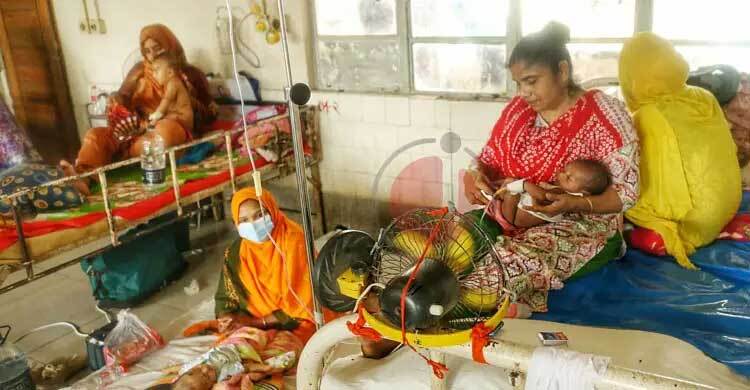
A rapidly spreading measles outbreak is turning into a growing public health crisis in Bangladesh, with rising child deaths exposing critical gaps in vaccination coverage, disruptions in immunisation programmes and the impact of widespread malnutrition.
At least 38 children have died from measles or its complications so far this year, according to health sector sources, with 32 of those deaths reported in March alone. Officials say the actual toll could be higher, possibly approaching 50, due to incomplete reporting from across the country.
The situation is most difficult at the Infectious Diseases Hospital (IDH) in Mohakhali, Dhaka, where a surge in patients has strained capacity. Hospital sources say 21 children died there this month alone, including three on Sunday. Additional deaths have been reported at Bangladesh Children’s Hospital and Institute (six), Mymensingh Medical College Hospital (five), Chapainawabganj (four), and Rajshahi Medical College Hospital (one).
Sharp rise in infections
Doctors say measles cases began increasing in December but escalated sharply in March, spreading beyond the capital to districts including Mymensingh, Chapainawabganj, Pabna, Natore and Rajshahi.
At IDH alone, 560 suspected measles cases have been recorded so far this year, compared to just 69 during the same period last year. Of these, 448 patients were admitted in March. Dozens remain hospitalised as facilities continue to struggle with the influx.
Hospitals across the country are facing similar pressure. At the DNCC Covid-19 Dedicated Hospital in Dhaka, 85 measles and suspected cases are currently under treatment, including 17 in intensive care. Mymensingh Medical College Hospital admitted 105 patients this month, while Chapainawabganj Sadar Hospital has treated around 250 cases. In Noakhali, more than 300 children have been infected in the past two weeks.
Vaccination gaps at the core
Public health experts identify lapses in immunisation as the primary driver of the outbreak.
Although Bangladesh’s measles vaccination coverage is officially estimated at 90-92 per cent under the Expanded Programme on Immunisation (EPI), roughly 10 per cent of children remain unvaccinated each year – leaving enough susceptible individuals to sustain periodic outbreaks.
The situation has been exacerbated by the absence of a nationwide special vaccination campaign since 2020. A planned campaign in 2024 was not implemented, while routine immunisation services were disrupted multiple times last year due to health worker protests and operational challenges.
Health officials also point to supply constraints. Central vaccine stocks have nearly run out, with limited availability at the field level. However, authorities say new shipments have recently arrived, and preparations are underway for a nationwide campaign from mid-April, possibly ahead of Eid-ul-Azha.
Malnutrition increasing risk of death
Doctors warn that malnutrition is significantly increasing the severity of infections and the risk of death among children.
While measles itself can be life-threatening, fatalities are often caused by complications such as pneumonia, diarrhoea, ear infections and encephalitis. Malnourished children, especially those lacking vitamin A, are far more vulnerable due to weakened immune systems.
Disruptions to vitamin A supplementation and deworming programmes last year have further compounded the risks, health experts say.
Unusual infections among infants
Clinicians have also observed an alarming trend: a growing number of infections among infants younger than six months, an age group typically protected by maternal antibodies and not yet eligible for vaccination.
At the Infectious Diseases Hospital, even a four-month-old infant has been admitted with suspected measles, reflecting the intensity of community transmission.
Doctors say such cases indicate widespread exposure, increasing the risk for the most vulnerable age groups.
Hospitals under strain
The surge in cases has placed hospitals under intense pressure. Until recently, patients were being treated in corridors and staircases at IDH due to overcrowding, though authorities say the situation has improved somewhat following emergency measures.
The government has instructed major hospitals to open special wards to manage the influx, but frontline doctors warn that resources remain stretched.
Government steps up response
The government has approved a Tk 604 crore proposal to procure vaccines in response to the crisis. Health officials say fresh supplies have already arrived, and efforts are underway to launch a nationwide immunisation campaign.
Health Minister Sardar Md Sakhawat Hossain said authorities are expanding treatment capacity and have set up dedicated measles units in hospitals, including at the DNCC Covid-19 Dedicated Hospital.
He acknowledged the recent surge in infections but said the health system has the capacity to manage the situation.
Experts warn of worsening situation
Public health specialists caution that without urgent intervention, the outbreak could intensify.
Eminent physician Prof Dr ABM Abdullah said unvaccinated children are at the highest risk, though cases are also being detected among adults. He urged parents to ensure timely vaccination and seek medical attention at the earliest signs of symptoms, such as fever followed by a rash.
Child health expert Dr ARM Sakhawat Hossain said the surge is driven by missed vaccinations, service disruptions and public reluctance. He noted that measles outbreaks typically occur every five to six years and require booster campaigns, which have been delayed in this cycle.
He also warned of the disease’s high transmissibility, spreading easily through coughing and sneezing, with complications occurring in up to a quarter of cases.
Urgent need for coordinated action
Experts stress that containing the outbreak will require rapid implementation of a nationwide vaccination campaign, restoration of routine immunisation services and urgent measures to address child malnutrition.
Parents are also advised to isolate infected children to prevent further spread and seek immediate medical care if symptoms appear.
Without swift and coordinated action, health officials warn, the outbreak could escalate into a broader public health emergency, putting thousands of vulnerable children at risk.