
Shahidul slams ‘man-only’ Shibir event on July Charter

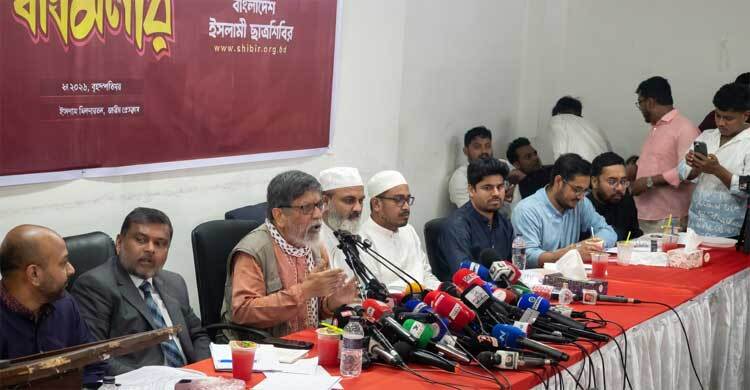
Acclaimed photographer and activist Shahidul Alam has criticised a seminar organised by Islami Chhatra Shibir for having no female representation among its speakers or audience, raising concerns over inclusivity in discussions on national issues.
The seminar, held at the National Press Club, focused on the implementation of the “July Charter.” Shahidul attended the event as a guest speaker.
In a Facebook post following the programme, he expressed disappointment over what he described as a “manel” – an all-male panel – despite the importance of the topic.
“Important topic. Sadly yet again, not a single woman on the ‘manel’,” he wrote, sharing a video from the event.
Shahidul noted that although he does not align with any political party and has “serious reservations” about the stance of Jamaat and Shibir on women, he chose to participate because of the broader national importance of the issue.
“I do not agree with every aspect of the July Charter. Yet here I am – because this is a matter of national interest, and that transcends my personal disagreements,” he said.
Reflecting on the origins of the July Charter, Shahidul said the movement did not emerge suddenly but was rooted in years of struggle and sacrifice.
He recalled student protests in 2018, highlighting placards that read: “We want to repair a broken nation,” adding that the demand remains relevant.
Acknowledging that reform efforts can be disruptive, Shahidul emphasised the need to continue working toward national improvement despite challenges.
“Repairs are never painless. They cause disruptions. They inconvenience people. But we cannot abandon the work of fixing this nation simply because it is uncomfortable,” he wrote.
He added that such inconveniences would eventually be addressed collectively, urging a forward-looking approach grounded in shared responsibility.