
JS repeals Supreme Court Judge Appointment Ordinance

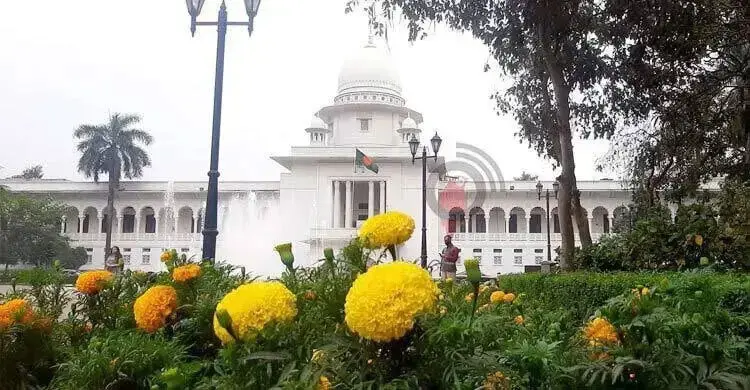
Parliament on Thursday, April 9, passed the Supreme Court Judge Appointment (Repeal) Bill, 2026, revoking the Supreme Court Judge Appointment Ordinance, 2025, which had created a council for judicial appointments.
Law Minister Md Asaduzzaman placed the bill in the House, seeking to annul the ordinance while ensuring legal protection for actions already taken under it.
The 2025 ordinance was originally promulgated by the interim government to expedite judicial activities and address the shortage of judges in the higher judiciary.
Under the ordinance, 25 judges were appointed to the Supreme Court.
The statement of the new bill explains that while the previous ordinance helped fill vacancies through a "Judicial Appointment Council," a permanent legal framework is now required.
It further states that the repeal is necessary to allow for more detailed scrutiny of the provisions related to judge appointments through a constitutional reform committee.
To avoid legal complications and ensure judicial continuity, the bill includes a "savings and custody" clause. This provision ensures that all appointments made, actions taken, and proceedings initiated under the 2025 ordinance will be treated as valid and effective.
NCP member Akhtar Hossain criticised the move to repeal the ordinance, describing it as a "beautiful law" that ensured transparency.
He argued that the previous system allowed the executive to control the judiciary like a "kite on a string."
"According to the current constitution, the President must appoint judges on the advice of the Prime Minister. This allowed partisan individuals to be appointed in the past," Hossain said.
He noted that the 2025 ordinance had introduced specific qualifications and a council that prevented the appointment of "sworn politicians" to the bench.
Hossain also pointed out that the current Law Minister, in his previous role as Attorney General, had defended the legality of the ordinance in the Supreme Court when it was challenged by a writ petition.
In response, Law Minister Md. Asaduzzaman said that while he theoretically agrees with the need for transparency, the government wants to establish a more robust and permanent system through constitutional reform.
Regarding his previous defense of the ordinance as Attorney General, Asaduzzaman clarified that a state lawyer follows the instructions of the government. "As Attorney General, I spoke for my client, the government. Now, as a minister and MP, the government's policy is to ensure complete transparency and accountability in judicial appointments through new measures," he said.
He invited the opposition to join a special committee for constitutional amendment to define the criteria for judge appointments.
"We want the judiciary to be independent and full of its own identity. We do not want any more 'politicised' judges to be created in Bangladesh. Let us detect where the disease lies in the system through hair-splitting analysis," the minister added.
Later, Akhtar Hossain's objection was rejected by voice vote, and the bill was passed.
Following the passage of the bill, Speaker Hafiz Uddin Ahmad informed the House that certain derogatory adjectives used by the opposition member regarding a former judge had been expunged from the parliamentary record.
Source: UNB