
Bangladeshis face problems as they lack unity: Mahathir

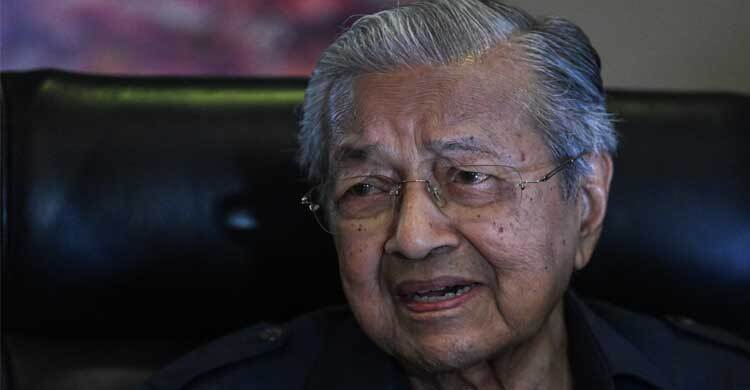
Former Malaysian Prime Minister Dr Mahathir Mohamad, a towering figure in Southeast Asian politics at 99, has expressed a blend of admiration and scepticism regarding Bangladesh’s ongoing political transition under Chief Adviser Dr Muhammad Yunus.
In an interview with UK-based ITV, Mahathir, who turns 100 next month, praised Yunus’s globally recognised work in poverty alleviation but raised concerns about Bangladesh’s fractured political unity and its aspirations to join ASEAN.
Praise for Yunus, doubts on democracy
Mahathir lauded Yunus, Bangladesh’s interim leader and Nobel laureate, as a “man of great stature” who “deserved the Nobel Prize” for his initiatives, like microfinance, that empowered the poor.
“He did not covet power, he only worked for the poor,” Mahathir noted, reflecting on their recent meeting in Japan. However, he stopped short of offering advice, stating, “I know he is in trouble. But I do not think I am qualified to say how Bangladesh will run.”
Despite his admiration, Mahathir highlighted challenges in Bangladesh’s path to democracy following the August 2024 ousting of Sheikh Hasina’s government.
“People were united to remove Sheikh Hasina, but there is no unity on what kind of government they want,” he observed. “Everyone wants their own opinion to be accepted by the whole country. And that is what is creating problems.” This lack of consensus among former allies, he warned, could destabilise the transition as Bangladesh prepares for elections in 2026.
ASEAN membership: A geographical roadblock
Mahathir poured cold water on Yunus’s push for Bangladesh to join ASEAN, citing geographical constraints. “Bangladesh is far from the geographical boundaries that Southeast Asia now implies,” he said, arguing that expanding ASEAN’s scope could dilute its identity, turning it into a “second United Nations.”
Instead, he suggested Bangladesh could engage as a dialogue partner or observer under the ASEAN Plus format, similar to Japan, the UK, or the US. This stance contrasts with earlier impressions from Yunus’s press office, which suggested Mahathir supported Bangladesh’s ASEAN bid during their Japan meeting.
Awami League’s future and democratic choices
On the contentious issue of whether the Awami League, which governed for 15 years under Hasina, should contest the upcoming elections, Mahathir offered a philosophical take: “This is a problem of democracy. People don’t always choose the best person; sometimes they choose the wrong person.”
He expressed confidence in Bangladeshi voters, stating, “If the people of Bangladesh think and make their decisions, I think they will be able to choose a good government.”
Rohingya crisis: Shared responsibility
Mahathir also addressed the Rohingya refugee crisis, expressing sympathy for the persecuted Muslim minority in Myanmar’s Rakhine State. He defended Malaysia’s limited capacity to accept more refugees, noting, “We already have a lot of Rohingya here.” Facing criticism for turning back Rohingya boats, he urged broader regional and international involvement, including from Bangladesh due to its proximity to Myanmar. “Normally you would go to a country nearby. You wouldn’t go to London,” he quipped, acknowledging Bangladesh’s burden of hosting over a million Rohingya.
Regional and political context
As Bangladesh approaches a pivotal electoral moment, Mahathir’s observations underscore the challenges of unity, regional integration, and humanitarian responsibility, leaving open questions about the country’s political and diplomatic trajectory.