
Sarjis slams EC over symbol denial, vows to 'See how the election is held'

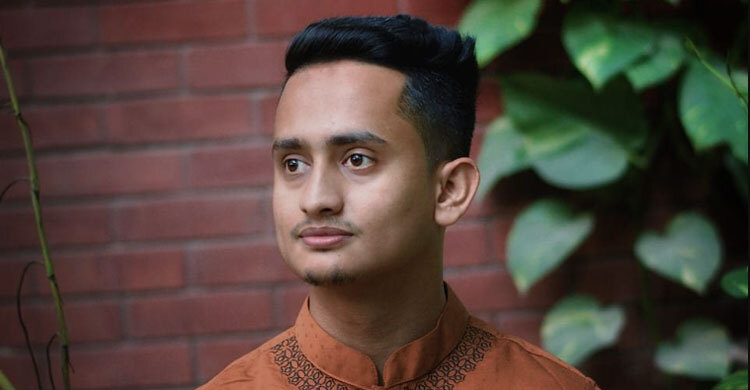
Sarjis Alam, Chief Organiser for the northern region of the National Citizens’ Party (NCP), has launched a sharp public protest against the Election Commission’s refusal to allocate the “Shapla” (water lily) symbol to his party — warning that the move casts doubt on the fairness of the upcoming elections.
In a strongly worded Facebook post on Tuesday, Sarjis challenged the Election Commission’s justification for denying the symbol, arguing that the absence of “Shapla” from the official list of electoral symbols does not constitute a legal barrier to its allocation.
“The Election Commission Secretary says ‘Shapla’ is not on the list — which only proves there is no legal obstacle to giving it to us,” Sarjis wrote. “On the very day we applied for registration, we explicitly requested the ‘Shapla’ symbol. Whose responsibility was it to include it in the list? Have officials at the Election Commission been sitting idle, watching a drama unfold? Or are they acting on instructions from another institution, party or agency — rather than functioning as an independent constitutional body?”
He insisted: “Since there is no legal prohibition, the NCP’s symbol must be Shapla. There is no other option.”
In a thinly veiled warning, he added: “Otherwise, we too shall see how the election is held — and who dreams of coming to power.”
Earlier on Tuesday, Election Commission Senior Secretary Akhtar Ahmed told reporters at the commission’s Dhaka headquarters that the NCP would not be granted the “Shapla” symbol.
“The reason is straightforward,” he said. “Our list contains 115 reserved symbols — and ‘Shapla’ is not among them. The rule is clear: parties must choose a symbol from this reserved list. If ‘Shapla’ is not on the list, there is no provision to allocate it.”
He urged the NCP to submit an alternative symbol proposal, adding that a final decision would be made through mutual agreement.
The “Shapla” — Bangladesh’s national flower — carries deep cultural and symbolic resonance. For the NCP, a party that emerged from the 2024 mass uprising and positions itself as a reformist force, securing the symbol is seen as both a matter of identity and legitimacy.
Sarjis Alam’s public challenge underscores growing tensions between newer political entities and the country’s electoral machinery — and raises broader questions about institutional neutrality ahead of the next general election.
Observers note that while the EC cites procedural rules, critics argue that flexibility has been shown in the past — and question whether political considerations are influencing administrative decisions.
As the NCP prepares its next move, Sarjis Alam’s words — “We too shall see how the election is held” — may well echo beyond social media, becoming a rallying cry for those demanding transparency, fairness and institutional independence in Bangladesh’s democratic process.