
Hilsa becomes a luxury as 1kg soars to Tk 4,500


With just one day left until Pahela Baishakh, many people are eager to include hilsa fish with panta rice (fermented rice) on their menu, even though it is not an age-old Bengali tradition. The excitement surrounding hilsa during the Bengali New Year is hard to miss. However, the reality is quite different.
Having panta-hilsa on the first day of the Bengali year has now become quite difficult, especially for low-income groups. The main reason is the soaring price of hilsa in the market ahead of the festival.
On Sunday (April 12) evening, a visit to Agora Super Shop in the capital showed that one-kilogram hilsa were being sold for Tk 4,500 each.
Reacting to the prices, several stunned customers told Jago News that anyone would be shocked to hear the current rates ahead of Pahela Baishakh. They said the fish is now beyond the reach of not only the poor but also the middle class.
A customer named Abu Ali said he had hoped to buy a hilsa if it was within his means, as his children insisted on having it for the New Year. “But after coming here and hearing the price, I am stunned,” he said.
Mehedi Hasan, a sales representative at Agora, said large hilsa are currently unavailable, which is driving up prices.
On the day, hilsa weighing around 700 grams were selling for Tk 2,200 each, 500-gram fish for Tk 1,020, and 300-gram fish for Tk 380 at the store.
Visits to different markets revealed that high prices are not limited to Agora; other super shops are also charging similarly high rates. The same upward trend was observed in various markets across Dhaka.
At Khilgaon Railgate kitchen market, vendors were asking Tk 3,700 to Tk 4,000 per kilogram for hilsa on Thursday evening. Hilsa weighing 800–900 grams were priced between Tk 2,800 and Tk 3,000 per kg, while 500–600 gram fish were selling for Tk 1,800 to Tk 2,200 per kg.
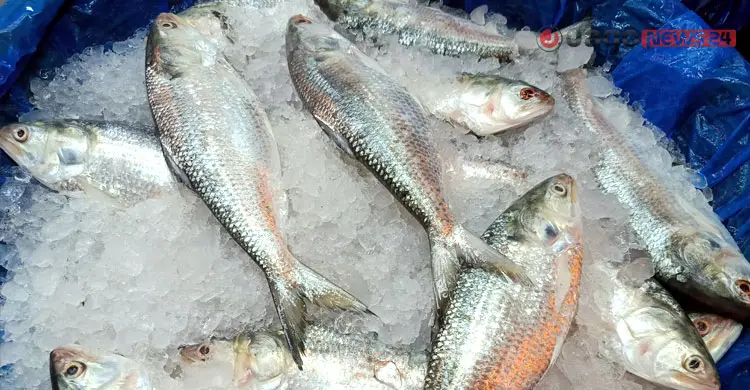
Smaller hilsa weighing 300 grams or less were available at Tk 1,000 to Tk 1,200 per kg—the lowest price range. Typically, three to four fish were being sold per kilogram at this size.
Meanwhile, prices at Malibagh kitchen market appeared to be Tk 100 to Tk 200 higher than those in Khilgaon. Visits to several markets also showed significant price variations depending on the size of the fish.
A vendor named Bijoy at the market said the current demand ahead of Pahela Baishakh far exceeds supply, leading to higher prices.
Many customers were seen leaving markets after hearing the prices. A buyer named Mallika Yasmin told Jago News that although everyone wishes to enjoy panta-hilsa during the festival, she has not been able to find hilsa within her budget despite visiting markets for several days.
“Prices are rising every day. I’m going back again today without buying. It feels even more expensive now,” she said.
According to buyers, hilsa prices in the capital’s markets have been beyond the reach of ordinary people for nearly a week ahead of Pahela Baishakh. In the final days before the festival, prices have surged further, putting them out of reach for most. Many are calling for stronger market monitoring to preserve the festive spirit.
Some customers also expressed frustration after failing to buy hilsa. A buyer named Munmun said, “Every year during Pahela Baishakh, these syndicates become active, but the authorities do nothing. Market monitoring is only nominal. Coming to buy hilsa today feels like buying gold.”
Sellers, however, said hilsa prices have increased by Tk 500 to Tk 700 per kg over the past week. Faruk Hossain, a fish vendor at Khilgaon kitchen market, told Jago News that they had to purchase fish at higher prices from wholesalers.
He added that demand has surged ahead of the festival, while fish catches in rivers are lower this year. Additionally, there is a ban on catching juvenile hilsa (jatka).
“Due to low supply, wholesalers have raised prices. Since we are buying at higher rates, we cannot sell at lower prices,” the vendor said.