
Bangladesh's gold prices leave global market behind

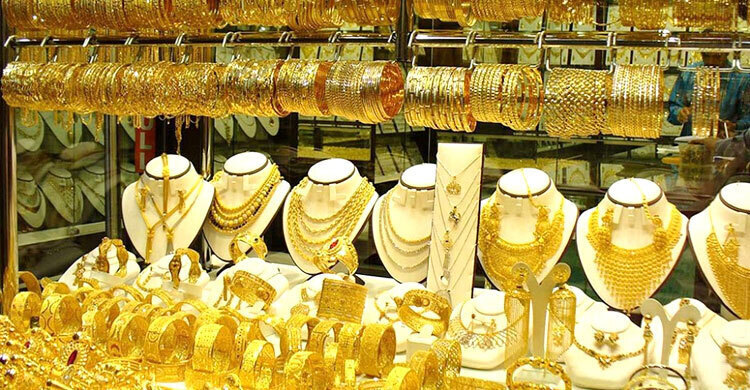
The recent surge in gold prices in Bangladesh has pushed the value of the precious metal beyond levels anticipated by global market trends.
On Sunday, high-quality 22-carat gold reached an all-time high of Tk 167,833 per bhori (11.664 grams), marking the highest price ever recorded in the country.
This record-breaking price follows the latest revision implemented on Sunday, as announced by the Bangladesh Jewellers' Association (Bajus).
Global vs local price discrepancy
Goldman Sachs has projected that the global price of gold could reach $3,700 per ounce by the end of 2025 (one ounce equals 31.1035 grams). However, Bangladesh’s local gold prices have already surpassed current international benchmarks.
According to Bajus, the price of 22-carat gold has been fixed at Tk 14,389 per gram, translating to Tk 447,548 per ounce locally. In contrast, the current spot price for gold in the United States is approximately $3,328.30 per ounce, equivalent to around Tk 402,724 at the current exchange rate.
This means that gold in Bangladesh is being sold at a premium of Tk 44,824 higher than the international market rate, highlighting a significant disparity between local and global pricing.
Recent price revisions
The latest price hike is part of a series of increases over the past week. On Wednesday, Bajus raised the price of gold by Tk 3,033 per bhori, followed by another increase of Tk 2,624 per bhori on Saturday, effective from Sunday.
Under the new pricing structure, hallmarked 22-carat gold is now priced at Tk 167,833 per bhori; 21-carat gold at Tk 160,205 per bhori; 18-carat gold at Tk 137,309 per bhori; and traditional method gold has risen to Tk 113,491 per bhori.
Prior to Sunday, the prices stood at: Tk 165,209 per bhori for 22-carat hallmarked gold; Tk 157,697 per bhori for 21-carat gold; Tk 135,174 per bhori for 18-carat gold; and Tk 111,660 per bhori for traditional gold.
Factors influencing local prices
In a press release, Bajus explained that the selling prices of gold and silver include additional charges mandated by the government and the association: A 5 per cent VAT as per government regulations and a 6 per cent minimum wage set by Bajus, which may vary depending on the design and craftsmanship of the jewellery.
These factors contribute to the higher retail prices in Bangladesh compared to global spot rates.
Implications for consumers
The rising cost of gold has sparked concerns among consumers and industry stakeholders alike. While global demand and economic uncertainties continue to drive prices upward, the premium charged in Bangladesh reflects local market dynamics, including taxes and labour costs.
As gold prices remain volatile, both domestic buyers and investors are closely monitoring trends to gauge future movements. Meanwhile, the gap between local and international prices underscores the need for greater transparency and alignment with global benchmarks.
Source: UNB