
Taskforce working to make statistics credible, inclusive: Hossain Zillur

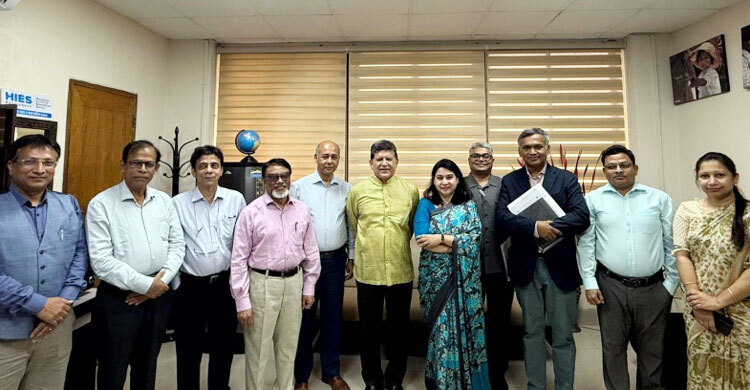
Hossain Zillur Rahman, Chair of the Task Force on Quality, Transparency and Availability of Statistics at the Bangladesh Bureau of Statistics (BBS), said that participatory discussions are underway to ensure an inclusive, realistic, and future-focused reform process.
He emphasised that efforts are being made to establish a credible and nationally responsive statistical system across various sectors – from education to grassroots NGOs.
Zillur, also executive chairman of the Power and Participation Research Centre (PPRC), made these remarks at the second executive meeting of the task force, held Tuesday at the BBS headquarters.
The session focused on improving the quality, openness, and credibility of the national statistical system, with the Secretary of the Statistics and Informatics Division (SID), the Director General of BBS, and other senior officials in attendance.
Task force members present included: Mohammad Abdul Wazed, former Director General of BBS, Dr Fahmida Khatun, Executive Director of the Centre for Policy Dialogue (CPD), Dr Mohammad Abdur Razzak, Chairman of Research and Policy Integration for Development (RAPID), Professor Syed Shahadat Hossain, President of the Bangladesh Statistical Association, Professor Mohammad Moinul Islam, Department of Population Sciences, University of Dhaka, Professor Atanu Rabbani, Department of Economics, University of Dhaka, and Dr Mohammad Yunus, Research Director at the Bangladesh Institute of Development Studies (BIDS).
The meeting outlined that the task force will work to produce credible, inclusive statistics through extensive engagement with all relevant stakeholders.
It will assess ground-level realities in data generation and propose actionable reforms, to be submitted to the Planning Adviser within 90 days.
Additionally, the task force will recommend aligning statistical surveys conducted by other ministries and organisations with those of the BBS to ensure coherence and consistency.
The task force members also developed a strategic approach and work plan cantered on institutional architecture, the broader data ecosystem, professional incentives, enhanced access, a dedicated methodology unit, core surveys, and mandatory periodicity of data collection.
With institutional support from BBS, the task force will organize stakeholder consultations across five key groups: academia, development partners, media, the private sector, and NGOs. It will also conduct a field-level “reality check” to understand the practical challenges of data generation.
Findings and insights from these engagements will inform a comprehensive reform blueprint, to be submitted to the Planning Advisor within the stipulated 90-day timeframe.
Hossain Zillur Rahman stated, "We will organize stakeholder consultations to ensure an inclusive, grounded, and forward-looking reform process. Engaging diverse voices—from academia to grassroots NGOs—will be key to developing a statistical system that is both credible and responsive to national needs.”
As Bangladesh moves toward more data-informed governance, the task force’s work represents a renewed national commitment to modernizing statistical infrastructure and reinforcing public trust in official data.
Earlier, the task force held an introductory meeting with Planning Adviser Professor Wahiduddin Mahmud to discuss the scope and strategic direction of their work.