
Wet blue exports allowed after 35 years, tanners vehemently oppose

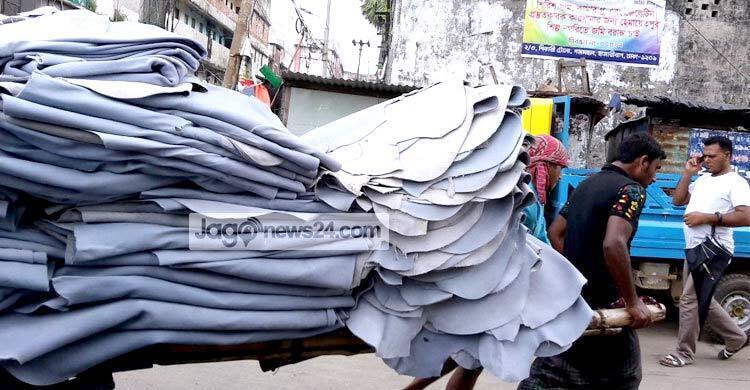
To ensure fair prices for sacrificial animal hides, the government has relaxed export restrictions on raw and wet blue leather (processed hides with fur intact) for three months, marking the first such move in nearly 35 years.
While raw leather traders welcome the decision, tannery owners are strongly opposing the move.
Traders believe the policy will slightly boost leather prices ahead of Eid al-Azha, increasing demand and ensuring better returns for sellers.
The export of raw and wet blue leather has been banned for decades, with wet blue leather last exported in 1990.
In 2021, the government permitted a limited export of 10 million square feet of wet blue leather on a case-by-case basis. This year’s broader policy could unlock a long-closed opportunity.
Wet blue leather, processed after removing the animal’s skin and fur, is in high demand in countries like China, Hong Kong, South Korea, Italy, Japan, and Spain, where Bangladesh already exports fully processed crust and finished leather. However, the finished leather market has faced a slump in recent years.
Manjur Hasan, president of the Bangladesh Hide and Skin Merchant Association, told Jago News, “Exporting raw and wet blue leather is a positive step to ensure fair prices. It will increase demand and allow sellers to export last year’s preserved hides, which can be stored for up to two and a half years.” Aftab Khan, former president of the association and owner of Mahbub & Brothers, added, “This benefits everyone, but challenges remain. Raw leather traders lack export experience, and with Eid approaching, finding new markets is tough.”
Exporters noted that tannery owners have historically formed syndicates to buy hides at low prices, contributing to a collapse in leather demand and exports. Despite government-fixed prices for salted hides, tanners often ignored them, forcing sellers to accept rock-bottom rates. The export ban exacerbated this, leaving common sellers with minimal returns. Traders now see exports as a chance to secure better prices but have sought government support to access new markets.
However, tannery owners, represented by Md Sakhawat Ullah, Senior Vice President of the Bangladesh Tanners Association and owner of Salma Tannery, oppose the decision.
He told Jago News, “Exporting wet blue leather threatens an industry that employs thousands and involves billions in investments. It requires further analysis to assess the impact on tanneries.”
When asked why tannery owners, who can also export wet blue leather, view the decision negatively, Sakhawat Ullah replied, “Without value addition, wet blue leather fetches low prices. Why invest heavily in an industry only to export semi-processed leather? The ban since 1990 was meant to protect this sector.”
According to the Department of Livestock, approximately 14 million animals may be sacrificed this year. In 2013, cowhides fetched Tk 85-90 per square foot, but prices have since declined, with this year’s rate set at Tk 60-65 per square foot.
However, hides have often sold at half the government price, leading to distress among sellers, with some burying unsold hides.
To support preservation, the government is providing 30,000 tonnes of salt this year. Traders have praised both the export policy and the salt provision.