
Gas exploration, renewable energy should get budgetary priority

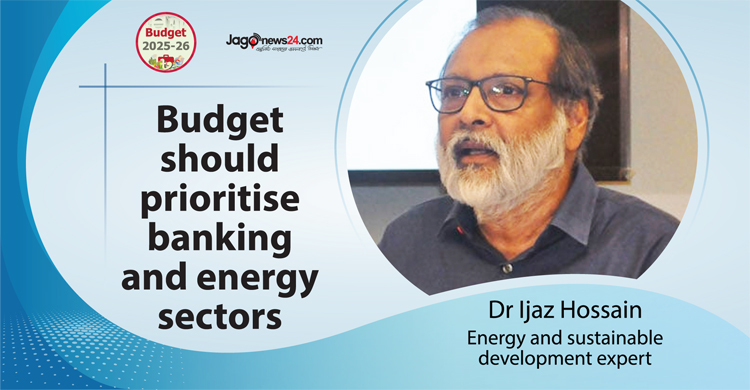
Despite the ongoing crisis in the energy sector, the power sector received significant focus in the 2024-25 fiscal year budget, with an allocation of Tk 29,230 crore. In contrast, the energy sector was allocated only Tk 1,870 crore taka, drawing criticism from power and energy experts. As the 2025-26 fiscal year budget approaches – the first under the interim government – questions arise about the appropriate allocation for the power and energy sectors and the key areas that should be prioritised. Dr Ijaz Hossain, a former professor at Bangladesh University of Engineering and Technology (BUET) and an expert in energy and sustainable development, shared his insights on these issues in an interview with Jago News’ Md Nahid Hasan.
Jago News: What are the expectations for the power and energy sectors in the 2025-26 fiscal year budget?
Dr Ijaz Hossain: As the interim government prepares its first budget under challenging circumstances, this is a critical opportunity to address longstanding issues. The economy faces difficulties, with poor tax collection and a struggling industrial sector.
While all governments emphasise renewable energy, tangible action has been lacking. The upcoming budget must prioritise and adequately fund the renewable energy sector to drive progress.
Given the government's limited resources, equitable allocation is crucial. The banking and energy sectors have suffered significant losses and remain weakened. These sectors should be the budget's top priorities. The energy sector, in particular, requires substantial subsidies. After accounting for subsidies and loan repayments, little funding may remain, underscoring the need for urgent reforms.
In the energy sector, the focus should be on exploration and green energy initiatives for electricity generation. By prioritising these areas, we can gradually overcome the sector's challenges.
Jago News: In the last budget, the power sector was prioritised despite the ongoing energy crisis. What are your thoughts?
Dr Ijaz Hossain: The budget should not repeatedly prioritize the power sector over the energy sector. While the power sector requires adequate funding, we must ensure that exploration efforts are not neglected. Funding exploration with our own resources is critical. Without sufficient allocation for exploration, the energy crisis will persist.
Currently, we rely heavily on LNG imports as our primary energy source. Continued imports are necessary for now, but successful gas exploration could reduce this dependence in the future.
Governments often emphasise renewable energy, but tangible action is lacking. The renewable energy sector must be prioritised with sufficient funding to drive meaningful progress.
Jago News: How much priority should be given to domestic gas exploration?
Dr Ijaz Hossain: The initiative to drill 100 wells for gas exploration is critical and must succeed. The budget should allocate sufficient funds to ensure the success of this programme.
Jago News: The government appears to rely heavily on LNG imports. Is this a sustainable solution?
Dr Ijaz Hossain: Currently, LNG imports are our primary energy source, and we must continue importing for now. However, successful domestic gas exploration could reduce our reliance on LNG in the future, provided we prioritise and achieve results in exploration.
The renewable energy sector also needs strong support. Unnecessary taxes on solar panels and inverters should be eliminated to encourage adoption. Additionally, allocating funds to procure more coal or LNG can ensure smoother operations in the energy sector. While we no longer face excessive costs for power generation, the government still bears expenses for nuclear power plants.
Jago News: The last budget allocated Tk 100 crore for the renewable energy sector, which you’ve highlighted as critical. What specific measures are needed for this sector in the upcoming budget?
Dr Ijaz Hossain: Governments often emphasise renewable energy but fail to act effectively. The renewable energy sector must be prioritised with adequate funding to meet its needs. Unnecessary taxes on solar panels and inverters should be removed to encourage adoption. Government land should be utilised for solar projects, and subsidies, if provided to the energy sector, should prioritise renewables. Offering even a small subsidy, such as Tk 1 per unit, could drive significant progress in the sector over time.