
Unexpected shock can push 6cr Bangladeshis back into poverty: WB

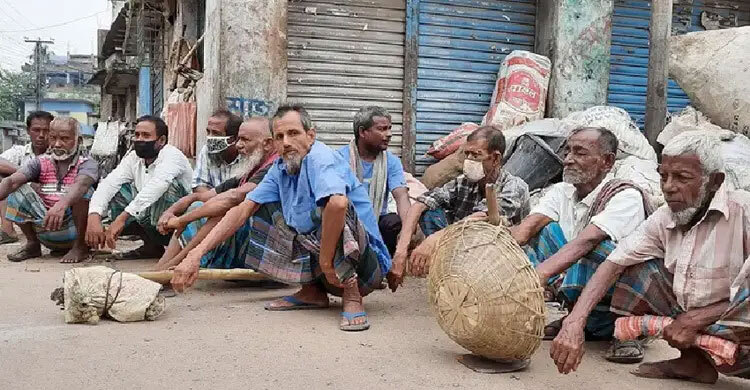
Bangladesh made remarkable progress in reducing poverty between 2010 and 2022, lifting 25 million people out of poverty and another 9 million out of extreme poverty, while improving access to electricity, education, healthcare, and sanitation.
However, a new World Bank report warns that these hard-won gains are now increasingly fragile – and that an unexpected disaster or economic shock could push nearly 6 crore people back below the poverty line.
According to the Bangladesh Poverty and Equity Assessment 2025, extreme poverty fell sharply from 12.2% to 5.6%, while moderate poverty dropped from 37.1% to 18.7% during the 12-year period.
Yet despite this progress, 62 million Bangladeshis – almost one-third of the population – remain highly vulnerable, living just above the poverty threshold and at constant risk of slipping back if struck by illness, a natural disaster, job loss, or inflationary shock.
Poverty reduction slows as inequality rises
The report notes that after 2016, Bangladesh’s growth became less inclusive. Income gains increasingly favoured the wealthiest households, widening inequality.
While rural poverty declined – driven largely by agriculture – urban areas saw far slower progress. By 2022, one in every four poor people in Bangladesh lived in a city, where high living costs and limited job creation made households more vulnerable.
“A business-as-usual approach will not work”
Jean Pesme, World Bank Division Director for Bangladesh and Bhutan, emphasised the urgency of a new economic approach: “Bangladesh has long been a global example in poverty reduction. But with severe climate vulnerabilities, weaker job creation, and a rapidly changing global economy, millions are at risk. A business-as-usual approach will not accelerate poverty reduction.”
He stressed that job creation – especially for youth, women, and vulnerable communities – is the most powerful tool to prevent mass poverty reversals.
Job market stagnation makes households more exposed
Manufacturing job creation has stalled, pushing workers into less-productive sectors. This shift has hit young people and women the hardest:
1 in 5 young women is unemployed
1 in 4 educated young women cannot find a job
Half of all youth aged 15-29 are in low-paid, low-skill jobs
Urban job stagnation outside Dhaka has worsened inequality, while falling female labour force participation has left millions of families without a stable safety net.
Migration helps – but not equally
For many households, migration – both domestic and international – remains a key path out of poverty. Remittances have played a significant role in reducing poverty, particularly for poorer families.
However:
Domestic migrants often live in overcrowded, unsafe urban settlements
International migration remains unaffordable for low-income households, with recruitment fees among the highest in the region
Social Protection Fails to Reach Those Who Need it Most
Despite an expansion of social assistance programmes, the system remains weak, poorly targeted, and prone to leakage. In 2022:
35% of the richest households received social protection benefits
50% of the poorest households were left out entirely
Subsidies are also skewed, with wealthier households receiving disproportionate benefits from electricity, fuel, and fertiliser subsidies.
Climate risks magnify the yhreat of mass poverty
Bangladesh is one of the world’s most climate-vulnerable countries. Rising sea levels, cyclones, floods, and river erosion intensify the risk of a large-scale poverty resurgence. A major disaster — similar to Cyclone Sidr, the 1998 floods, or a global economic shock — could instantly push tens of millions below the poverty line.
World Bank economist Sergio Olivieri warned: “Climate risks are deepening spatial disparities. Rural and coastal areas are increasingly exposed, while urban areas are struggling with overcrowding and poor job growth.”
Four policy priorities to prevent poverty reversal
The World Bank recommends a comprehensive strategy to protect Bangladesh’s progress and shield vulnerable families from sudden shocks:
Strengthen foundations for productive, resilient jobs
Create more and better employment opportunities for the poor and vulnerable
Build markets that work for the poor through improved regulation and modern processing
Boost resilience through stronger public finances and effective, well-targeted social protection
With climate risks rising and economic pressures mounting, the report concludes that Bangladesh must act now to prevent millions from being pushed back into poverty by a single unexpected disaster.