
NBR charting transformative course for next budget: Chairman

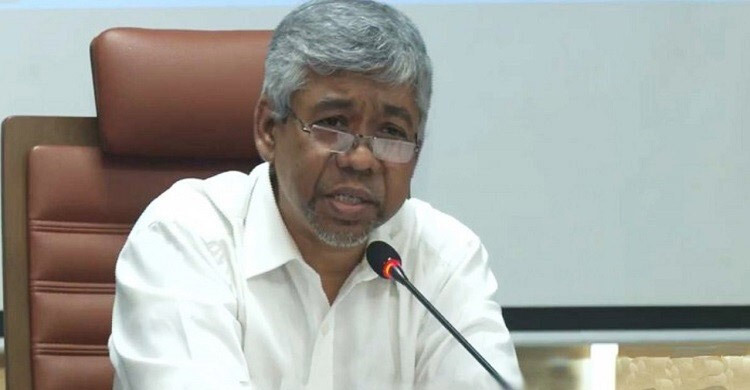
The National Board of Revenue (NBR) is charting a transformative course for the upcoming national budget of the fiscal year 2026-27 (FY27), focusing on scientific revenue forecasting, structural reforms, and aggressive measures to curb economic disparity.
NBR Chairman Md Abdur Rahman Khan gave the announcement during a pre-budget meeting with the Economic Reports’ Forum (ERF) held at the NBR in Dhaka on Tuesday, March 31.
In his speech, the NBR chief outlined a strategy to meet the government's high revenue requirements and manage the country's rising public debt, which has continued to grow this year.
“The upcoming fiscal framework aims to balance GDP growth with efficient public spending, ensuring that tax money is prioritised for essential state expenditures,” he added.
To address growing economic inequality, he mentioned that the NBR is viewing Income Tax as its most powerful tool.
“A proposed 5 per cent additional tax for super income earners (those earning over Taka 1 crore annually) is being considered for 2027, signalling that those with higher capacity must contribute more,” he added.
He said that the NBR is working toward a single-rate VAT structure, though the Chairman cautioned against a drastic reduction of the standard 15% rate.
“Lowering the rate to 7%, as some have suggested, would be disastrous for revenue collection, as compliant taxpayers currently provide the bulk of VAT revenue,” he added.
The NBR chief said that a major focus of the upcoming budget will be the tobacco sector, which faces significant tax evasion through counterfeit stamps.
To combat this, he said, the NBR is implementing track and trace mechanisms using QR codes and mobile apps for cigarette packets; launching a Whistleblower Programme where citizens will be rewarded for identifying non-tax-paid or fake products; and restructuring the tobacco tariff structure to maximise revenue, noting that prices in Bangladesh remain lower than in neighbouring countries despite high tax rates.
He mentioned that they are committed to phasing out long-term tax exemptions to bring more sectors under regular tax rates.
“In a significant policy shift, the board will no longer grant exemptions based on external pressure; instead, such decisions will be subject to parliamentary oversight to ensure transparency,” he added.
Furthermore, he said, the government is moving toward the separation of tax policy from tax collection.
“This reform is intended to ensure that policy-makers focus on macroeconomic stability and public welfare rather than being driven solely by collection targets, which can sometimes lead to policies that do not serve the broader public interest,” he added.
The Chairman acknowledged that the economy faces major shocks due to global war situations and a lack of export diversification.
With the budget size growing to support national development, he mentioned that the NBR emphasises that increasing internal revenue is critical for economic resilience.
During the meeting, ERF General Secretary Abul Kashem submitted a comprehensive 37-point proposal to the NBR for the upcoming 2026-27 fiscal year, advocating for a business-friendly environment, administrative modernisation, and significant relief for low and middle-income groups.
At the proposal, the ERF emphasised that the recommendations are designed to ensure transparency, accountability, and the expansion of the tax net while adjusting for current global and domestic economic pressures.
In response to prevailing inflationary pressures, the ERF proposed increasing the tax-free income limit for individual taxpayers to Taka 5 lakh, stressing the need for inflationary harmony to protect the purchasing power of the general public.
The forum recommended setting the maximum personal income tax rate between 30 and 35 per cent.
It highlighted the need for specific sectoral interventions, most notably recommending a 5 per cent tax reduction for Print, Television, and Online media outlets.
To promote environmental sustainability, the ERF proposed a 5% corporate tax reduction for industries adopting environmentally friendly practices.
To increase the Tax-GDP ratio and ensure equity, the ERF proposed several mandatory compliance measures.
The forum called for a mandatory TIN requirement for owners of buildings with five or more floors across the country.
Additionally, it recommended that the NBR verify whether account holders with deposits exceeding Taka 10 crore are fulfilling their tax obligations.
The ERF proposed the establishment of a Media Taxpayer Unit (MTU) on a district and city corporation basis to streamline tax processes for journalists and media houses.
The forum also called for a dedicated Media Center within the NBR building and the introduction of ERF-NBR reporting awards.
The ERF requested the NBR to begin conducting an impact analysis of its existing and proposed policies to ensure they meet intended economic goals.
To monitor progress and maintain dialogue, the forum proposed holding quarterly meetings between the NBR and ERF members.
To ensure financial discipline, the ERF recommended a mandatory requirement for banks to verify business information through the NBR database before approving loans.
Finally, the forum emphasised that the NBR should utilise internationally recognised transaction value databases for customs valuation to ensure the credibility and accuracy of goods valuation.
Source: BSS