
Govt plans alternate offline, online schooling six days a week

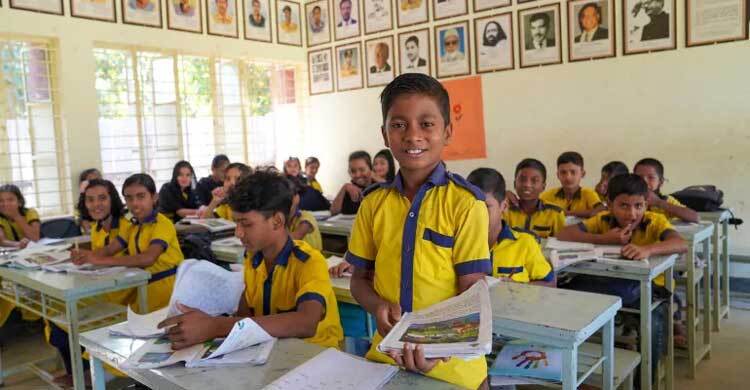
Bangladesh’s school routine may soon undergo a significant shift, as the government moves toward a hybrid model that blends online and in-person classes, spread across six days a week instead of the incumbent five days.
The proposal, driven largely by efforts to manage the ongoing global energy crisis, aims to keep academic activities running while reducing pressure on power consumption.
Education and Primary and Mass Education Minister ANM Ehsanul Haque Milon said the plan is to run classes six days a week, alternating between physical and virtual sessions.
“The prime minister has instructed us to explore ways to conserve energy. As part of that, we are considering keeping schools open six days instead of five, with a mix of online and offline classes,” he told reporters outside the Cabinet Division on Tuesday.
A new weekly rhythm
Under the proposed structure, students would attend classes in person one day and shift online the next, creating a steady rotation throughout the week. In practical terms, that could mean three days of classroom learning and three days of virtual lessons.
Officials say teachers will remain present at schools even during online days, conducting lessons digitally from campuses to maintain continuity and supervision.
Pilot thinking in the capital
The idea has already been discussed in coordination meetings involving teachers, education board representatives and officials from the Ministry of Education, particularly focusing on Dhaka’s metropolitan institutions where digital access is relatively stronger.
Authorities believe such areas are better suited to pilot the hybrid system before considering wider implementation.
Flexible, but under watch
Officials emphasise that the plan is still evolving. If challenges emerge, whether technical, logistical or academic, the model will be adjusted accordingly.
At its core, the proposal reflects a balancing act: keeping classrooms active while adapting to energy constraints, without fully stepping away from in-person learning.
If approved, the shift could mark one of the most notable changes in Bangladesh’s school structure in recent years, redefining how students split their time between classrooms and screens.