
India bolsters military presence on Chicken’s Neck

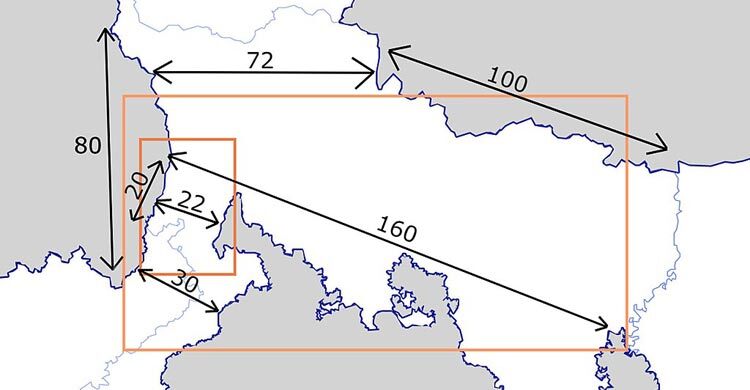
India has significantly fortified its military presence along the strategically vital Siliguri Corridor, commonly known as the 'Chicken’s Neck,' amid growing concerns over Bangladesh’s deepening ties with China.
The narrow strip of land in West Bengal, which connects India’s north-eastern states to the rest of the country, is now being described as India’s strongest defence line following advanced military deployments and heightened vigilance.
Indian media reported that the Indian Armed Forces have implemented multi-layered security measures to safeguard the corridor:
- Advanced Weaponry Deployment: The Indian Air Force has stationed Rafale fighter jets at Hashimara Airbase, complemented by a regiment of BrahMos supersonic cruise missiles to deter ground and aerial threats.
- Air Defence Systems: The S-400 missile system, alongside Medium-Range Surface-to-Air Missiles (MRSAM) and Akash air defence systems, ensures comprehensive airspace protection.
- Operational Readiness: The Trishakti Corps, headquartered near the corridor, conducts regular combat drills, including live-fire exercises with T-90 tanks, to maintain high operational preparedness.
Indian Chief of Defence Staff (CDS) General Anil Chauhan recently visited the area to review the region’s defence posture, underscoring India’s commitment to securing the corridor against potential threats.
India’s actions come in response to Bangladesh’s increasing engagement with China under the Belt and Road Initiative (BRI). Recent discussions between Dhaka and Beijing on strategic infrastructure investments have heightened New Delhi’s sensitivities about the security of the Siliguri Corridor.
Adding to these concerns were remarks by Bangladesh’s interim head of government Muhammad Yunus, where he referenced India’s northeast. While Yunus has not explicitly outlined any policy shifts, his comments have been interpreted in New Delhi as a subtle indication of Dhaka’s willingness to explore alternative partnerships beyond India.
The Siliguri Corridor gained prominence during the 2017 Doklam standoff, when Indian forces countered Chinese attempts to construct a road in Bhutanese territory—a move that could have compromised the corridor’s security. Since then, India has consistently upgraded its defence infrastructure in the region.
For Bangladesh, the corridor holds significant importance due to its role in regional connectivity initiatives like the Bangladesh-Bhutan-India-Nepal (BBIN) framework.
However, Dhaka’s warming relations with Beijing risk straining ties with New Delhi, particularly concerning the corridor’s security.