
India claims Bangladesh’s exports to Nepal, Bhutan won’t be affected

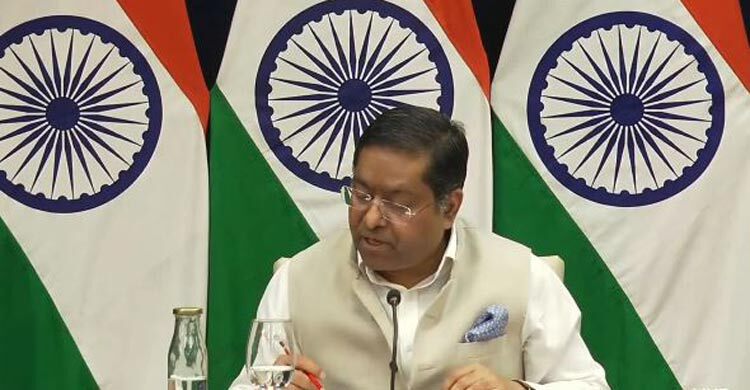
Following India's decision to withdraw the transshipment facility for Bangladesh, the country's Ministry of External Affairs (MEA) clarified on Wednesday that the move will not impact Bangladesh’s exports to Nepal or Bhutan transiting through Indian territory.
The Central Board of Indirect Taxes and Customs (CBIC) had issued a circular on Tuesday (April 8, 2025), formally withdrawing the transshipment facility that allowed Bangladesh to export goods to third countries via Indian land borders.
The earlier arrangement permitted Bangladeshi cargo to pass through Indian Land Customs Stations (LCSs) en route to Indian ports and airports.
During the weekly media briefing on Wednesday (April 9), Randhir Jaiswal, the official spokesperson for the MEA, explained the rationale behind the decision: "The transshipment facility extended to Bangladesh had, over time, resulted in significant congestion at our airports and ports. Logistical delays and higher costs were hindering our own exports and creating backlogs. Therefore, the facility has been withdrawn effective April 8, 2025," Jaiswal said while responding to a question.
He emphasised, "To clarify, these measures do not impact Bangladesh’s exports to Nepal or Bhutan transiting through Indian territory."
The withdrawal of the transshipment facility has raised concerns among Bangladeshi exporters, as it was introduced in June 2020 to facilitate smoother trade flows between Bangladesh and third countries via India. However, Indian officials have maintained that the decision was driven by logistical challenges, including congestion at key cargo hubs like Delhi Air Cargo Complex, which reportedly hindered the movement of Indian exports.
For Bangladesh, the withdrawal of the transshipment facility poses logistical challenges, particularly in finding alternative routes for its exports to third countries. Analysts suggest that Bangladesh may need to explore partnerships with other neighboring nations or invest in enhancing its own logistics infrastructure to mitigate the impact of this decision.
As regional dynamics evolve, diplomatic engagement between India and Bangladesh will remain crucial to addressing mutual trade interests while balancing national priorities.