
Islamabad empty as Iran-US talks turn capital into fortress

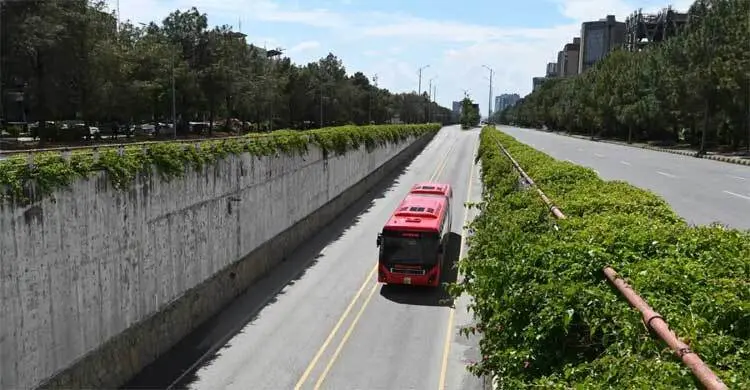
The morning sun casts long shadows across Constitution Avenue, but the usual chorus of car horns, chai vendors and hurried footsteps is missing. In its place, a watchful silence hangs over Islamabad, broken only by the low rumble of a passing security convoy.
The capital has taken on the air of a fortress.
More than 10,000 security personnel now patrol its tree-lined sectors. The tightly guarded Red Zone – home to embassies and key government buildings – has been sealed off behind multiple layers of security. The Serena Hotel in Islamabad, where crucial meetings are expected, is under heavy guard. Roads are closed, schools have shifted online, and many government offices stand empty.
The city is waiting.
“It feels like Islamabad is holding its breath,” says Fatima Ali, a nurse at a private hospital near the diplomatic district. “We’ve been told Thursday and Friday are holidays. Security convoys are everywhere. You can feel the tension.”
A capital under watch
Set against the foothills of the Margalla Hills, Islamabad is no stranger to diplomatic activity. Foreign delegations are a regular presence in its orderly sectors. But this moment feels different.
The world is watching.
Iranian officials and a senior US delegation led by Vice President JD Vance are expected to arrive on Friday, with talks due to begin the following day. The meeting comes after more than a month of conflict involving the United States and Israel on one side and Iran on the other. A fragile two-week ceasefire hangs in the balance.
Convoys of black SUVs sweep through unusually quiet streets. Police and military checkpoints have multiplied along major routes. Paramilitary rangers stand guard outside government buildings, a visible reminder of the stakes.
“The security grid is multi-layered,” says a senior law enforcement official, speaking on condition of anonymity. “This involves coordination, intelligence and constant monitoring. The aim is zero disruption and full control.”
Streets sealed, daily life paused
Authorities have placed large parts of the capital on high alert. Containers and barbed wire block key roads. Schools in nearby sectors have moved to remote learning, while offices in sensitive areas have temporarily closed to ease movement restrictions.
Islamabad Police issued a public advisory urging residents to avoid unnecessary travel, noting that the Red Zone and surrounding areas are closed to all but official vehicles.
Diversions have redirected traffic away from major arteries, including routes leading to Nur Khan Airbase and Old Airport Road. Neighbourhoods such as Shah Khalid Colony, Gulzar-e-Quaid and Airport Housing Society are facing strict limitations on movement.
Neighbouring Rawalpindi has also been placed on high alert. Emergency services and hospitals remain on standby, with staff and supplies ready.
‘Foolproof security’ for crucial talks
Pakistan’s interior minister, Mohsin Naqvi, recently met US Chargé d’Affaires Natalie Baker to review preparations. Describing the visiting delegation as “special guests”, he said a comprehensive plan was in place to ensure their safety.
A 30-member US advance team has already arrived in Islamabad to assess arrangements, underscoring the sensitivity of the moment.
To facilitate the visit, authorities have declared a two-day local holiday. For residents like Ahmed Raza, a tea vendor who usually serves customers in the Red Zone, the restrictions bring mixed feelings.
“There’s a sense the world is watching us,” he says, arranging unused cups on his counter. “But we cannot move freely. My customers aren’t coming. We’re told to stay home.”
Between hope and unease
The talks come at a delicate moment. Washington and Tehran have agreed to a conditional two-week ceasefire, opening the door for direct negotiations aimed at turning a temporary truce into something more lasting. Yet tensions remain high, with fresh warnings from Iran following Israeli strikes in Lebanon.
For many residents, the heightened security brings both pride and unease.
“We are waiting,” says Fatima Ali, glancing at the near-empty streets after her shift. “The whole city is waiting. We can only hope what happens inside those secure walls brings peace—not just for our region, but for the world.”
A city in suspension
As the talks draw near, Islamabad feels suspended in time. The usual rush of traffic has faded into the occasional hum of a convoy. Cafés that once buzzed with debate sit half-empty. Even the foothills of the Margalla range seem quieter than usual.
From the hills above, security forces keep watch over the capital. Surveillance has been tightened. Perimeters have been extended, block by block.