
Strife among people leads to law and order breakdown: Army chief

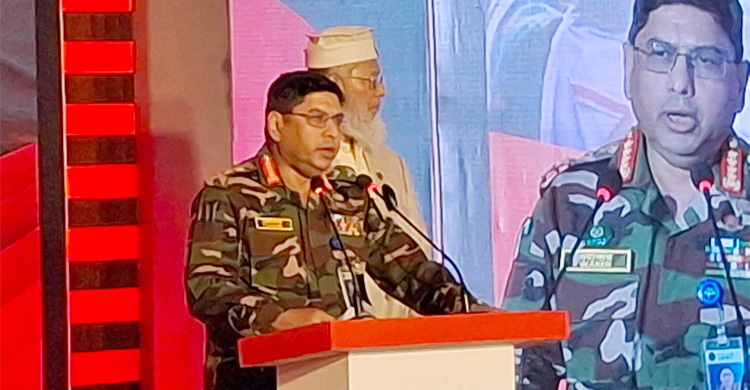
Army Chief General Waker-Uz-Zaman pinpointed divisions among people as the primary cause of the country’s worsening law and order situation, warning that infighting among citizens is creating a breeding ground for crime.
He made these remarks during a special program, "In Memory of the Martyred Officers of the Pilkhana Massacre," held on National Martyrs’ Day, Tuesday, February 25.
"The root of our deteriorating law and order is that we’re too busy fighting each other," General Waker-Uz-Zaman said.
"This chaos is a golden opportunity for criminals—they know they can get away with it in this anarchy." He stressed that unity and organisation are key to tackling the crisis. "If we stand together, we can handle this collectively," he said
Addressing the current state of law enforcement, the Army Chief highlighted significant challenges. "Police aren’t functioning today. Many face cases, many are in jail. RAB, BGB, DGFI, and NSI are rattled. Investigations into disappearances and murders are ongoing—and they must be. Culprits will face justice, but we can’t let these institutions crumble in the process," added the army chief.
General Waker-Uz-Zaman underscored that maintaining peace is not solely the army’s burden.
"I’ve got 30,000 soldiers—half on duty, half in cantonments—working tirelessly. But there are two lakh police, plus BGB, RAB, and Ansar-VDP. How can I do this alone with 30,000?" he asked, emphasising the need for a broader effort.
He attributed the disorder to the actions of the populace itself. "This mess is our own making. If we don’t reverse course, peace and order will never return—you must remember that," he cautioned. Despite differences in opinions or ideologies, he urged unity for the nation’s sake. "We may think differently, but we must unite for the country and its people. Only then will we progress and steer in the right direction."