
Rain brings relief, but clogs Dhaka

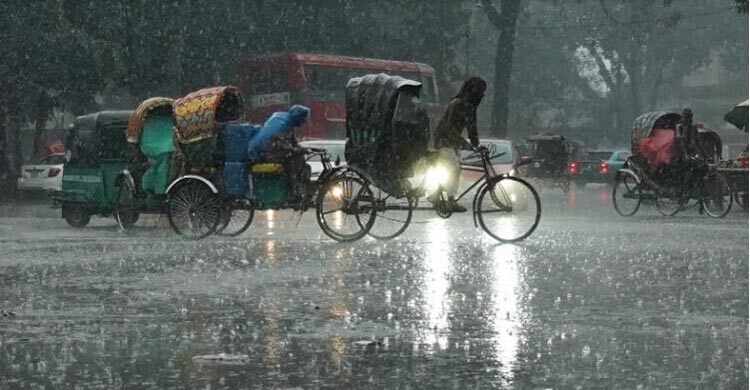
On Wednesday afternoon, as the sweltering heat of early April began to feel unbearable, a much-needed spell of rain swept across Dhaka, offering residents a fleeting yet welcome respite.
The third day of the Bengali month of Baishakh was marked by a refreshing downpour that cooled the city’s feverish streets and brought smiles to many faces.
Clouds began gathering around 2:45pm, and within minutes, light drizzle set in, accompanied by a gentle breeze. By 3:00pm, the intensity of the rainfall had picked up, drenching the bustling metropolis and providing relief from the oppressive heat.
According to the Bangladesh Meteorological Department, Dhaka recorded 32 millimetres of rainfall by 6:00pm – a modest yet significant amount for the parched capital.
The rain persisted into the evening, transforming what had been a stifling afternoon into a rare moment of comfort for city dwellers. For many, it was a brief escape from the relentless humidity and soaring temperatures that have become synonymous with Dhaka’s pre-monsoon season.
While the rain was a blessing for some, it also brought its share of inconveniences. Commuters were caught off guard, with many stepping off buses or rickshaws only to find themselves drenched due to a lack of umbrellas or raincoats. Waterlogging on poorly maintained roads added to the woes of pedestrians, turning parts of the city into virtual obstacle courses.
Under the Mouchak Flyover, Zahidur Rahman, an employee at a private bank, took shelter near a tea stall as the drizzle continued. Nursing a cup of steaming tea, he recounted his ordeal: “I wasn’t prepared for the rain, so I got completely soaked as soon as I left the office,” he said. “And with all the digging happening along the roadsides, dirty water has pooled everywhere, mixing with sewage. It’s disgusting when it splashes onto you.”
He also expressed frustration over the scarcity of rickshaws during the downpour, making walking home through flooded streets his only option.
Elsewhere, an elderly passenger aboard a BRTC bus requested the driver to stop near a roadside shelter in the Mirpur Chinese area. Concerned about catching a cold from sudden exposure to the rain, he hesitated to disembark without cover.
The Bangladesh Meteorological Department had earlier forecast temporary gusty winds, thunderstorms, and rain – possibly accompanied by hail – in parts of the Mymensingh and Sylhet divisions, as well as isolated areas of Rangpur, Rajshahi, Dhaka, Khulna, Barisal, and Chattogram divisions. While Dhaka experienced moderate rainfall, other regions reported varying levels of precipitation, underscoring the seasonal shifts characteristic of this time of year.
As the rain subsided and life slowly returned to normal, the episode once again laid bare the inadequacies of Dhaka’s drainage infrastructure. Poorly managed road excavations, coupled with inadequate stormwater drainage systems, exacerbated flooding in low-lying areas. Pedestrians waded through knee-deep water, while vehicles moved cautiously to avoid stalling in submerged streets.
For a city already grappling with overpopulation and urban congestion, these recurring issues serve as stark reminders of the urgent need for improved civic planning and sustainable solutions.
Despite the challenges posed by the sudden downpour, there was no denying the joy it brought to many. Children played gleefully in puddles, while adults savoured the cool breeze that followed the rain. For a few hours, the scorching heat receded, allowing residents to breathe easier—if only temporarily.
Yet, as the clouds cleared and the sun peeked through once more, the underlying issues remained unresolved. As one resident aptly put it, “Rain is always a gift, but we need better preparation to handle it. Until then, every shower will be both a blessing and a burden.”
In a city where seasonal changes often bring chaos, the recent rainfall serves as both a moment of relief and a call to action—a reminder of nature’s generosity and humanity’s responsibility to adapt and thrive.