
PFAS poison: Bangladesh's water under silent attack

In Bangladesh, an invisible menace is seeping into rivers, soil, and lives.
Perfluoro and polyfluoroalkyl substances (PFAS) – toxic “forever chemicals” from industrial waste – are wreaking havoc, especially on low-income communities near factories.
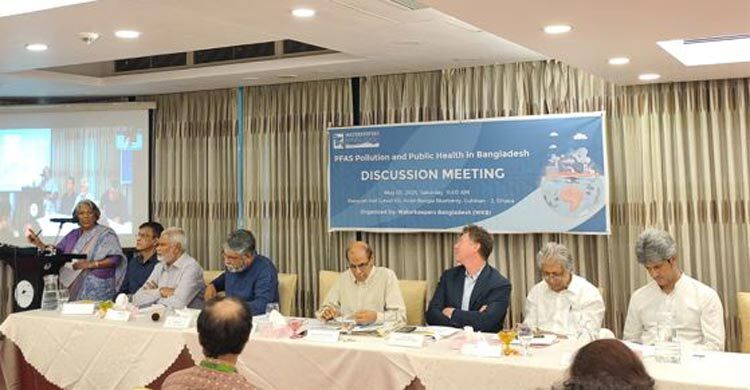
At a gripping forum hosted by Waterkeepers Bangladesh in Dhaka on Saturday, May 3, experts sounded the alarm: PFAS pollution is a ticking time bomb for public health and the environment.
The numbers are chilling. Development activist Shahid Hasan revealed that 67 per cent of Bangladesh’s water pollution flows from the garment industry, with leather processing a close second.
“Poor families are drinking poison, farming with tainted water,” he warned.
“This fuels cancer, wipes out biodiversity, and slashes crop yields.” Yet, Bangladesh lags behind globally, with no policy to ban PFAS.
Sharif Jamil spotlighted a grim reality: “Most people don’t even know PFAS is in their water.”
The chemicals, used in textiles and cosmetics, linger indefinitely, earning their “forever” moniker. Hubert Blom, European Union Programme Manager, framed it as a global crisis, pushing for tighter chemical import controls and industry oversight.
“This isn’t just Bangladesh’s fight,” he said.
The event, packed with environmentalists, policymakers, and global advocates, buzzed with urgency.
Dr Mujibur Rahman Howlader, former National River Protection Commission chairman, did not mince words: “Our laws exist, but enforcement is feeble. We need political muscle and united action to save our ecosystems.”
Moderated by Waterkeepers Bangladesh Coordinator Sharif Jamil, with Social Welfare Adviser Sharmin S Murshid as chief guest, the discussion laid bare the stakes.
Political voices joined the fray. BNP Chairperson’s Adviser Dr Sakhawat Hasan Jiban demanded harsh penalties for polluters, tying environmental protection to good governance.
Ganosamhati Andolan Chief Coordinator Zonayed Saki called for a broader view of public health, rooted in environmental justice. “It’s not just about hospitals—it’s about clean water and air,” he urged.
International advocates like Jackie Esposito of Waterkeeper Alliance and Amanullah Parag of 3Fifty.org pressed for a national roadmap to curb PFAS.
Dr Zaki Yusuf and Atal Kumar Majumdar of ESDO echoed the call, warning that inaction risks a public health catastrophe.