
Thousands of crores of takas now disappear abroad with a single click: Shafiqul

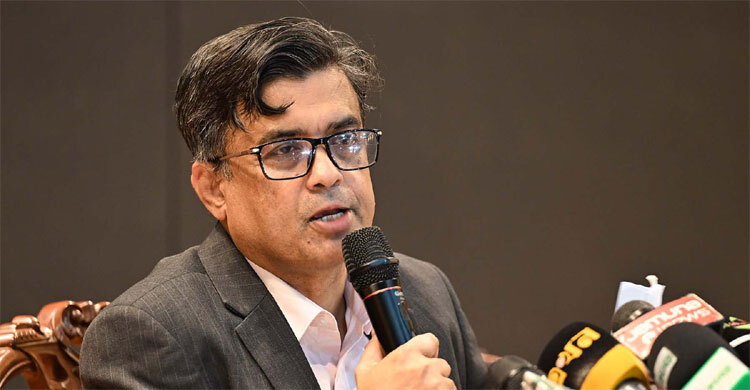
Press Secretary to the Chief Adviser Shafiqul Alam has said that major acts of corruption in Bangladesh are now being carried out using digital systems, making it easier for large sums of money to be transferred abroad instantly instead of through traditional cash-based methods.
“Most major corruption today is done with IT support. As transactions become cashless, we are seeing a shift – no more bags full of money. Now, thousands of crores of taka can disappear abroad in just one click,” he said.
Shafiqul made the remarks during a press briefing held at the Foreign Service Academy on Bailey Road in Dhaka on Thursday (November 27). The briefing followed the final approval of the ‘Anti-Corruption Commission (Amendment) Ordinance-2025’ in a meeting of the Advisory Council chaired by Chief Adviser Dr Muhammad Yunus.
He said the Advisory Council had earlier formed a commission to examine the structure and effectiveness of the Anti-Corruption Commission (ACC), including defining corruption and identifying control mechanisms.
Based on its report, the amendment ordinance – first approved in principle – has now been finalised to strengthen the ACC and curb the scale of corruption observed in recent years.
According to Shafiqul, Cabinet Secretary, Law Secretary, ACC officials, and anti-corruption advocate Dr Iftekharuzzaman of Transparency International Bangladesh (TIB) worked on the draft for several weeks before final approval.
He also revealed that a proposed oversight committee for commissioner selection was removed at the final stage.
“Corruption in Bangladesh is so layered that even an oversight body may, in time, become compromised,” he said.
Under the new ordinance, the ACC will have five commissioners, including at least two with IT expertise. The ordinance also mandates the appointment of at least one female commissioner.
Additionally, the ACC will be required to publish its performance reports online every six months, and all commission officials will have to publicly declare their asset statements.