
Govt forms panel to clean up dev projects, boost accountability

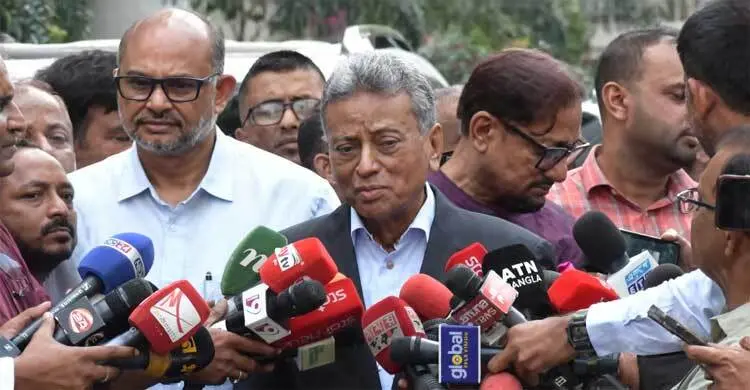
The government has formed a high-level committee to review ongoing development projects, aiming to cut waste, improve accountability and ensure better use of public funds, Finance and Planning Minister Amir Khosru Mahmud Chowdhury said.
The move comes under the directive of Prime Minister Tarique Rahman and was announced following the first meeting of the Executive Committee of the National Economic Council (ECNEC) of the newly formed government, held at the Cabinet Division on Monday.
According to the minister, the committee will be convened by Dr Rashed Al Mahmud Titumir, Adviser to the Prime Minister on Finance and Planning. It has been tasked with conducting a comprehensive evaluation of long-pending and cost-escalated projects to determine which should be scrapped, revised or continued.
“This is essentially a balance sheet clean-up,” Khosru said, adding that the initiative is aimed at fulfilling commitments made to citizens by ensuring that public spending delivers real value.
Scrutiny of ‘questionable’ projects
The minister noted that many development projects undertaken in the past have faced criticism over delays, repeated cost revisions and questionable necessity.
The newly formed panel will examine these projects in detail, identifying those that no longer align with national priorities and recommending corrective actions.
“We have to be very careful because every taka spent belongs to the people,” he said, stressing that the government intends to remove inefficient projects to make room for more impactful initiatives.
ECNEC begins cautious approvals
At Monday’s ECNEC meeting, a total of 19 projects were placed for consideration. However, only seven were reviewed during the session.
Of those, some received approval while others were sent back for further scrutiny, signalling a more cautious and selective approach to public spending under the new administration.
Shift from politics to performance
Dr Titumir said many projects in the past were initiated on political considerations rather than economic viability, often lacking a clear return on investment.
He said the new committee will assess whether such projects serve any meaningful purpose and whether they should continue.
“The goal is to move away from political patronage and ensure public money is used strictly for public welfare,” he said.
He also pointed to a long-standing lack of accountability in project implementation, where costs were frequently inflated and timelines extended without adequate justification.
Growth concerns and ADP focus
The adviser raised concerns over a widening imbalance between rising government operating expenses and relatively stagnant development spending under the Annual Development Programme (ADP).
He emphasised that ADP represents capital expenditure critical for driving economic growth.
“If the quality and implementation rate of the ADP do not improve, national growth will continue to come under pressure,” he warned, noting that recent growth trends have already shown signs of slowdown.
Aligning projects with national priorities
Officials say the overarching aim of the review initiative is to align all development projects with the government’s policy priorities and public commitments.
The committee is expected to expedite the process of clearing a backlog of problematic projects while paving the way for new initiatives that better reflect current economic needs.
Addressing concerns about political bias, Dr Titumir said the government is committed to transforming electoral pledges into a national development agenda.
“The focus now is to ensure that every project serves the national interest and reflects the mandate of the people,” he added.
With tighter scrutiny and a renewed emphasis on efficiency, the government hopes the initiative will mark a shift towards more disciplined and outcome-driven public spending.
Source: BSS