
Alliances candidates must contest with own party symbols

A new provision has been introduced in the draft reforms of the Representation of the People Order (RPO) saying that candidates contesting under an alliance must run with their own party’s symbol, ensuring transparency and clear voter choice.
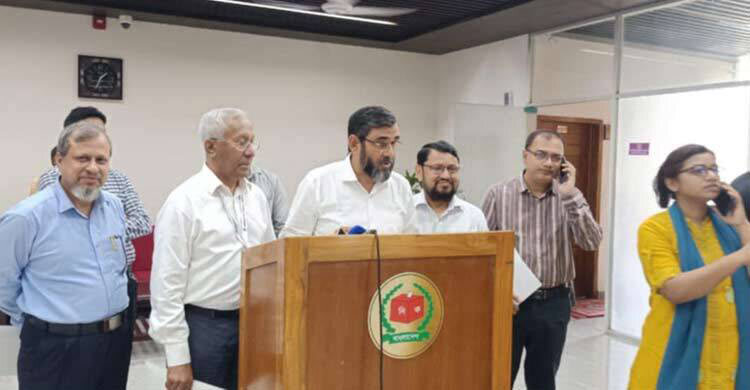
The decision was taken during a meeting of the Election Commission (EC) held on Monday, August 11, at the Election Building in Agargaon, chaired by Chief Election Commissioner AMM Nasir Uddin.
The session aimed to finalise a set of electoral reforms ahead of the upcoming 13th parliamentary elections.
Later that evening, Election Commissioner Abul Fazal Md Sanaullah disclosed the key outcomes of the meeting.
“Even if parties form an alliance, each candidate must contest under their respective party symbol,” Sanaullah said. “This ensures that voters know exactly who they are voting for and prevents confusion or manipulation.”
The EC also approved several other major changes:
- Armed forces included as law enforcement agencies: The army, navy, and air force have been formally included in the definition of law enforcement bodies. This allows the EC to deploy service personnel for election duties on par with police and other security forces.
- EVMs abolished: The use of Electronic Voting Machines (EVMs) has been officially scrapped. All provisions related to EVMs have been removed from the RPO draft, reaffirming the Commission’s earlier commitment to use paper ballots.
- Clearer penalties for negligence: The draft now includes provisions for stricter accountability of election officials. Any failure to perform duties will be subject to disciplinary action, and investigation reports must be submitted to the EC within three days of an incident.
- Targeted ‘No’ vote provision: While the ‘None of the Above’ (NOTA) option will not be reintroduced in all constituencies, a ‘No’ vote will be included in seats with only one candidate. This is to prevent automatic or uncontested victories.
- In such cases, the lone candidate must secure more votes than the ‘No’ option to win.
- If the ‘No’ vote wins, a re-vote* will be held.
- If the ‘No’ vote wins again, no further election will be held and the candidate will be declared elected, ensuring that no seat remains vacant.
The ‘No’ vote was first used in the 2008 general election, but was later removed. The current reform does not restore it universally but applies it selectively to uphold electoral competitiveness.
Sanaullah confirmed that the finalised reform package will be submitted to the relevant ministry next week. If approved by the government, it will be issued as an amendment ordinance.
“Additionally,” he said, “if the Consensus Commission submits any further recommendations, those will be incorporated into the process at a later stage.”
The reforms reflect the Election Commission’s broader commitment to transparency, fairness, and public trust in the electoral process as Bangladesh prepares for the February 2025 national elections.