
Bangladesh says 'no' to India World Cup for ‘genuine security risk’

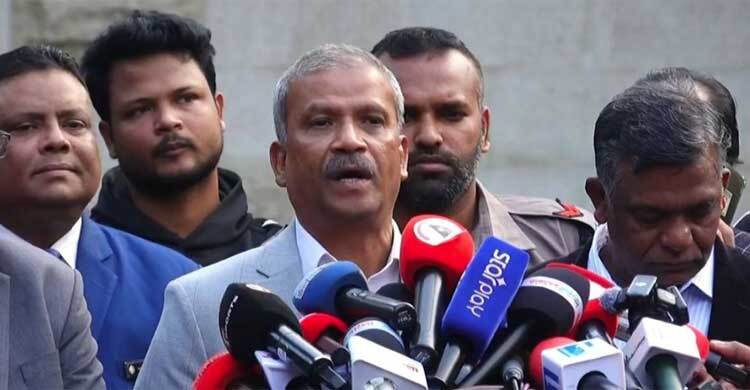
Bangladesh has taken a hard political and sporting stand, officially confirming that the national cricket team will not travel to India for the upcoming T20 World Cup, citing “genuine security risks” amid a volatile regional political climate.
The decision, announced on Thursday by Sports Adviser to the interim government Asif Nazrul, directly defies an ultimatum issued by the International Cricket Council (ICC) just a day earlier and places the matter firmly under state authority rather than cricket administration.
“Bangladesh is not travelling to India to play the World Cup due to the genuine security risk – this is a decision made by the Bangladesh government. No other entity has any rights to take this decision,” Asif Nazrul told reporters.
The statement effectively overrides the Bangladesh Cricket Board’s (BCB) ongoing attempts to negotiate with the ICC and challenges the global body’s insistence on sticking to the original India-hosted schedule.
Earlier, BCB President Aminul Islam Bulbul confirmed the government’s position after a meeting with the Sports Adviser, saying Bangladesh is not withdrawing from the tournament but is refusing to play in India.
“We will contact the ICC again,” Bulbul said. “We do not want to play in India. We want to play in Sri Lanka.”
Asif Nazrul said the government’s stance is rooted in security concerns and national responsibility, stressing that the safety of players, officials, journalists and fans is non-negotiable. He added that he had personally consulted national team cricketers before finalising the decision.
Addressing possible financial penalties and sporting fallout, the Sports Adviser argued that national dignity and human safety outweigh commercial and competitive costs.
“You should also consider what the damage would be if we played the World Cup,” he said. “Pushing our players, fans, and journalists into a genuine risk amidst this regional political situation, with our heads bowed down… is a damage that must be weighed.”
On Wednesday, following a board vote on Bangladesh’s application, the ICC informed the BCB that Bangladesh would have to travel to India to take part in the World Cup. The ICC warned that refusal could result in Bangladesh being dropped from the tournament, with Scotland named as a potential replacement.
The ICC also asked the BCB to submit its final position within a day.
Despite the hardline stance from the global governing body, the Bangladesh government says it is still hopeful of a last-minute diplomatic resolution through a venue shift.
“We still hope the ICC will do justice,” Asif Nazrul said. “There are many precedents in the world where matches are played at a different venue due to security risks. We have not given up hope yet.”
The escalating standoff has once again highlighted the power imbalance in global cricket governance, where host nations and commercial interests often outweigh the security concerns of touring teams – particularly those from smaller or less influential cricket boards.
What began as a scheduling issue has now evolved into a broader confrontation over sovereignty, safety and authority, with Bangladesh making it clear that when cricket politics collide with national security, the final call will come from the state – not the ICC.